

Quick Answer: The best hypoallergenic dogs for apartments are small, low-shedding breeds like the Bichon Frise, Maltese, Toy Poodle, Shih Tzu, and Havanese. No dog is 100% allergen-free, but these breeds produce significantly less dander and shed far less fur, making apartment life far more comfortable for allergy-prone owners. Choose a breed under 20 pounds for the easiest apartment fit.
Key Takeaways
- No dog breed is completely allergen-free, but low-shedding breeds dramatically reduce airborne dander in small spaces.
- The Toy Poodle, Bichon Frise, Maltese, and Havanese are consistently rated among the best hypoallergenic dogs for apartments.
- Most hypoallergenic apartment dogs weigh under 20 pounds and need 20 to 45 minutes of daily exercise.
- Regular grooming every 4 to 8 weeks is non-negotiable for most of these breeds to keep allergens low.
- Costs range widely: expect $800 to $3,500 from a reputable breeder, plus $50 to $150 per month in ongoing care.
- People with severe allergies should spend time with a specific dog before committing, not just a breed.
- First-time dog owners do best with the Bichon Frise, Maltese, or Havanese due to their gentle, forgiving temperaments.
- Hypoallergenic breeds still need consistent training, preventive care, and socialization to thrive in apartment environments.
What Exactly Makes a Dog Hypoallergenic?
“Hypoallergenic” means a dog produces fewer allergens than average, not zero allergens. Human allergies to dogs are primarily triggered by a protein called Can f 1, found in dog saliva, urine, and dander (dead skin flakes), not the fur itself. Low-shedding breeds spread less dander around your apartment because their coat traps it rather than releasing it into the air.
Key factors that make a breed lower-allergen:
- Minimal shedding coat: Curly or silky coats hold dander close to the body.
- Low drool production: Less saliva means less Can f 1 deposited on surfaces.
- Small body size: Smaller dogs produce less dander overall.
- Infrequent bathing needs: Some breeds stay cleaner naturally, reducing dander buildup.
Common mistake: Assuming a short-haired dog is automatically hypoallergenic. Breeds like Labrador Retrievers shed heavily despite short coats, spreading dander throughout a small apartment rapidly.
The 10 Best Hypoallergenic Dogs for Apartments
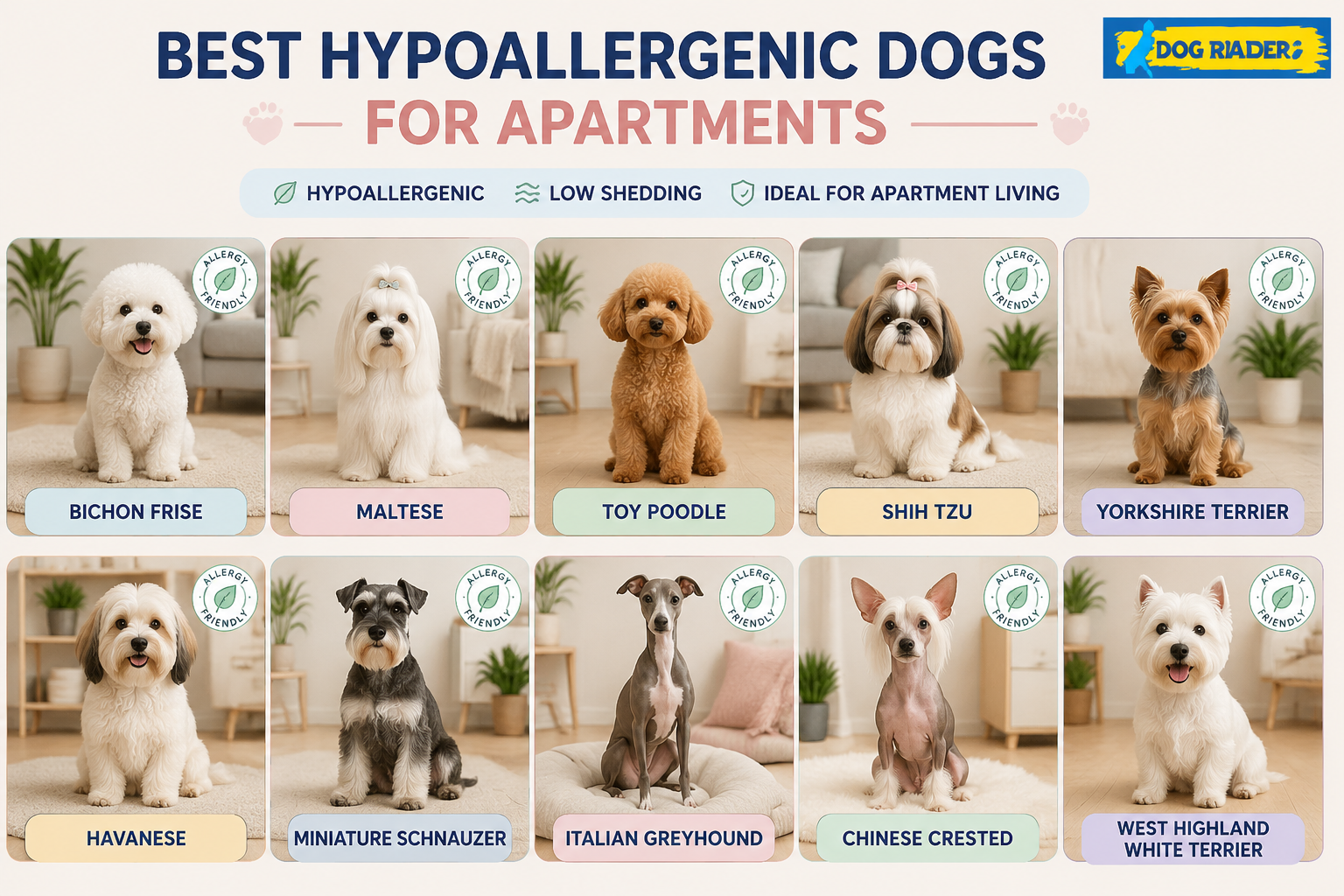
These ten breeds balance low allergen output with apartment-friendly size, temperament, and exercise needs. [1][2]
| Breed | Weight | Coat Type | Best For |
|---|---|---|---|
| Bichon Frise | 12-18 lbs | Curly, dense | First-time owners |
| Maltese | 4-7 lbs | Long, silky | Quiet apartment living |
| Toy Poodle | 4-6 lbs | Curly | Allergy sufferers, trainability |
| Shih Tzu | 9-16 lbs | Long, flowing | Families, seniors |
| Yorkshire Terrier | 4-7 lbs | Fine, silky | Active singles |
| Havanese | 7-13 lbs | Soft, wavy | Social households |
| Basenji | 22-24 lbs | Short, fine | Experienced owners |
| Chinese Crested | 8-12 lbs | Hairless or powderpuff | Severe allergy sufferers |
| Kerry Blue Terrier | 33-40 lbs | Soft, curly | Larger apartment spaces |
| Portuguese Water Dog | 35-60 lbs | Curly or wavy | Active owners |
Bichon Frise: A cheerful, cloud-like furry friend with a curly coat that sheds minimally. Its playful personality and gentle nature make it one of the top picks for first-time dog owners in apartments. [1]
Maltese: At just 4-7 pounds, this canine companion has a long, silky coat that produces very little shedding. Calm and affectionate, the Maltese thrives in quiet apartment settings. [1]
Toy Poodle: Arguably the gold standard for allergy sufferers. The Toy Poodle’s dense curly coat traps dander effectively, and its exceptional intelligence makes breed-specific training a genuine pleasure. [2]
Shih Tzu: Originally bred as a palace companion, the Shih Tzu has a low-shedding coat and an easygoing temperament. Regular grooming keeps their long hair manageable and allergens minimal. [1]
Yorkshire Terrier: Yorkies carry fine, silky coats that behave more like human hair than traditional dog fur, shedding very little. Their lively personalities fill an apartment with energy without filling it with dander. [1]
Havanese: Weighing 7-13 pounds, the Havanese has a soft, wavy coat that sheds very little. This breed is highly social, adaptable, and genuinely thrives in apartment environments. [3]
Basenji: Known as the “barkless dog,” the Basenji has a short, fine coat and minimal grooming needs. It suits experienced owners who can manage its independent streak.
Chinese Crested: The hairless variety is among the most hypoallergenic options available. With little to no coat, dander output is dramatically reduced, making it a strong choice for people with more pronounced allergies. [1]
Kerry Blue Terrier: A soft, curly coat with minimal shedding and a calm demeanor make the Kerry Blue a solid choice for larger apartment spaces. [1]
Portuguese Water Dog: This energetic breed adapts well to apartment living provided it gets sufficient daily exercise. Its curly coat sheds very little. [1]
Which Small Hypoallergenic Dogs Shed the Least
The lowest-shedding options among the best hypoallergenic dogs for apartments are the Maltese, Toy Poodle, Bichon Frise, and Chinese Crested. These breeds either have coats that trap loose hair before it falls or, in the Chinese Crested’s case, barely any coat at all.
Choose a Toy Poodle or Bichon Frise if you want the absolute lowest shedding combined with an easy-to-train temperament. Choose a Chinese Crested if severe allergies are a concern and you don’t mind a more unusual-looking furry friend.
Are Poodles Really Good for People With Allergies?
Yes, Toy and Miniature Poodles are genuinely among the best choices for allergy sufferers. Their tightly curled coats act like a filter, trapping shed hair and dander against the body rather than releasing it into the air of your apartment. [2]
Poodles also produce less saliva than many breeds, which reduces the spread of the Can f 1 allergen protein. Combined with their high intelligence and positive, effective dog training response, they are a top recommendation for both first-time dog owners and seasoned canine enthusiasts managing allergies.
Do Hypoallergenic Dogs Need Special Grooming?
Most hypoallergenic apartment dogs need more frequent grooming than average, not less. Because low-shedding coats don’t naturally release dead hair, that hair must be removed through regular brushing and professional grooming to prevent matting and dander buildup.
Grooming schedule by breed:
- Toy Poodle, Bichon Frise, Kerry Blue Terrier: Professional grooming every 4 to 6 weeks.
- Maltese, Shih Tzu, Havanese: Brushing every 2 to 3 days at home; professional grooming every 6 to 8 weeks.
- Yorkshire Terrier: Daily brushing if kept in a long coat; monthly trim if kept short.
- Chinese Crested (hairless): Skin moisturizing and sun protection instead of coat care.
- Basenji: Minimal grooming; weekly wipe-down is usually sufficient.
Preventive care tip: Bathing your dog every 2 to 4 weeks reduces surface dander significantly and is one of the most effective steps an allergy-prone owner can take.
Can People With Severe Allergies Still Own These Breeds?
People with mild to moderate allergies generally do very well with the breeds listed here. For those with severe allergies, the answer is more nuanced. The Chinese Crested (hairless variety) and the Maltese are the most commonly recommended options for sensitive individuals, but no breed guarantees a reaction-free experience.
Practical steps before committing:
- Spend at least two to three hours with the specific dog you plan to adopt, not just the breed.
- Visit the breeder’s home or a shelter and note any allergic response over 24 hours.
- Consult an allergist about immunotherapy options if you are committed to dog ownership.
- Run a HEPA air purifier in your apartment to reduce ambient dander regardless of breed.
How Much Do Hypoallergenic Dogs Cost?
Hypoallergenic breeds tend to cost more than average because of high demand and careful breeding practices. From a reputable breeder, expect to pay between $800 and $3,500 depending on the breed and location. Toy Poodles and Bichon Frises typically fall in the $1,000 to $2,500 range. [2]
Ongoing monthly costs (estimate):
- Food: $30 to $60
- Grooming: $50 to $100
- Veterinary preventive care: $30 to $60 (averaged monthly)
- Toys, treats, accessories: $20 to $40
Adoption from a rescue organization is a lower-cost alternative, often $150 to $500, and many hypoallergenic breeds have dedicated rescue groups. For more on why purebred dogs carry higher price tags, see our guide on why dogs are so expensive.
Which Hypoallergenic Dogs Are Best for First-Time Owners
The Bichon Frise, Maltese, and Havanese are the top three picks for first-time dog owners among the best hypoallergenic dogs for apartments. All three are forgiving of minor training inconsistencies, respond well to positive reinforcement, and adapt easily to apartment routines.
The Toy Poodle is also excellent for beginners because its intelligence makes breed-specific training faster and more rewarding. Avoid starting with a Basenji or Kerry Blue Terrier if you have no prior dog ownership experience, as both breeds have strong-willed personalities that benefit from a more experienced hand.
For more guidance on choosing a small canine companion, explore our best small dogs for apartments and quietest small dog breeds guides.
How Much Exercise Do Hypoallergenic Apartment Dogs Need
Most small hypoallergenic apartment dogs need 20 to 45 minutes of exercise per day. This is very manageable in an apartment setting with two short walks and some indoor play.
Exercise needs by breed:
- Low energy (20-25 min/day): Maltese, Shih Tzu, Chinese Crested
- Moderate energy (30-40 min/day): Bichon Frise, Yorkshire Terrier, Havanese, Toy Poodle
- Higher energy (45-60 min/day): Basenji, Portuguese Water Dog, Kerry Blue Terrier
The Portuguese Water Dog and Kerry Blue Terrier need the most stimulation. Without adequate exercise, these breeds can develop destructive behaviors in small spaces. Mental enrichment through puzzle toys and training sessions counts toward their daily needs.
What Health Problems Do These Breeds Typically Have
Every breed has predispositions worth knowing before you bring a furry friend home. Proactive preventive care and regular vet checkups are the best tools any owner has.
- Toy Poodle: Prone to progressive retinal atrophy, luxating patella, and dental crowding.
- Bichon Frise: Skin allergies (ironically), bladder stones, and cataracts.
- Maltese: Dental disease, luxating patella, and hypoglycemia in very small individuals.
- Shih Tzu: Brachycephalic airway issues, eye problems, and hip dysplasia.
- Yorkshire Terrier: Tracheal collapse, dental disease, and Legg-Calvé-Perthes disease.
- Havanese: Hip dysplasia, eye conditions, and deafness in some lines.
- Chinese Crested (hairless): Skin sunburn, dental problems, and temperature sensitivity.
For seasoned canine enthusiasts managing a senior dog, our article on once-a-day dog feeding pros and cons offers useful nutritional guidance as your dog ages.
What Is the Difference Between Bichon Frise and Maltese
Both are small, white, low-shedding dogs, but they differ meaningfully in coat texture, energy level, and temperament. The Bichon Frise has a dense, curly coat and a bouncier, more playful personality. The Maltese has a long, silky, straighter coat and tends to be calmer and more lap-dog oriented. [1]
Choose a Bichon Frise if you want a more interactive, energetic companion. Choose a Maltese if you prefer a quieter, more gentle furry friend that is content with less activity. Both are outstanding choices among the best hypoallergenic dogs for apartments.
How Do I Know If I’m Allergic Before Getting a Dog
The most reliable method is an allergy skin-prick test or blood test ordered by an allergist, which identifies sensitivity to specific dog proteins. However, lab tests don’t always predict real-world reactions accurately.
Practical pre-adoption steps:
- Spend extended time (2+ hours) in a home with the specific breed you’re considering.
- Visit a breed-specific rescue or reputable breeder and note symptoms over 24 to 48 hours.
- Ask a friend or family member with the same breed if you can dog-sit for a weekend.
- Keep antihistamines on hand during test visits to gauge the severity of any reaction.
If you’re exploring small dog options more broadly, our most intelligent small dog breeds guide and small dog breeds resource are great starting points for comparison.
FAQ
Are any dogs truly 100% hypoallergenic?
No dog is completely allergen-free. All dogs produce the Can f 1 protein in their saliva, dander, and urine. Hypoallergenic breeds simply produce and spread fewer allergens than heavy-shedding breeds.
What is the smallest hypoallergenic dog for an apartment?
The Maltese and Toy Poodle are among the smallest, both typically weighing under 7 pounds. The Chinese Crested also stays under 12 pounds and is one of the lowest-allergen options available.
Are hypoallergenic dogs good with children?
Many are, particularly the Bichon Frise, Havanese, and Shih Tzu. For a broader look at small dog compatibility with kids, see our best small dogs for kids guide.
Do hypoallergenic dogs bark a lot in apartments?
It depends on the breed. Yorkies and Bichons can be vocal. The Basenji is famously quiet. Training and early socialization reduce nuisance barking in any breed.
Can I adopt a hypoallergenic dog from a shelter?
Yes. Breed-specific rescues for Poodles, Maltese, and Bichon Frises exist in most regions. Mixed-breed dogs with hypoallergenic parentage are also common in general shelters.
How often should I bathe a hypoallergenic apartment dog?
Every 2 to 4 weeks is the general recommendation. More frequent bathing reduces surface dander but can dry out skin if done too often.
Is the Shih Tzu a good hypoallergenic dog for beginners?
Yes. The Shih Tzu is affectionate, low-energy, and responds well to gentle, consistent training. It’s a reliable choice for first-time dog owners in apartments.
What is the cheapest hypoallergenic dog breed?
Adopting from a rescue is the most affordable route at $150 to $500. Among purchased breeds, the Bichon Frise and Shih Tzu tend to be more accessible in price than Toy Poodles or Maltese from show-line breeders.
Do I need a HEPA filter if I have a hypoallergenic dog?
It’s strongly recommended for allergy-prone owners. A HEPA air purifier reduces ambient dander regardless of breed and makes a measurable difference in air quality in small apartments.
Once I choose a breed, how do I pick a name?
Our Dog Name Generator is a fun, easy tool to help you find the perfect name for your new canine companion.
Conclusion
Finding the right hypoallergenic apartment dog comes down to matching your allergy sensitivity, lifestyle, and experience level to the right breed. For most first-time dog owners, the Bichon Frise, Maltese, or Toy Poodle offer the best combination of low allergen output, manageable size, and trainable temperament. If you have more severe allergies, the Chinese Crested hairless variety deserves serious consideration.
Your actionable next steps:
- Identify your allergy severity with a professional test or extended breed exposure visit.
- Narrow your shortlist to two or three breeds using the comparison table above.
- Research reputable breeders or breed-specific rescues in your area.
- Set up your apartment with a HEPA air purifier and grooming supplies before your new furry friend arrives.
- Build a grooming and preventive care schedule from day one to keep allergens consistently low.
Your perfect canine companion is out there. With the right breed match and a little preparation, apartment life with a low-allergen dog can be genuinely wonderful for both of you. For more small dog guidance, browse our cutest small fluffy dog breeds and small dog breeds resources to keep exploring.
References
[1] Top 10 Hypoallergenic Dogs Perfect For Small Apartments – https://animalstart.com/top-10-hypoallergenic-dogs-perfect-for-small-apartments/
[2] Are There Hypoallergenic Dog Breeds Suitable For Apartments – https://furric.com/are-there-hypoallergenic-dog-breeds-suitable-for-apartments/
[3] Apartment Dog Breeds – https://www.petfinder.com/dogs-and-puppies/breeds/types/apartment-dog-breeds