
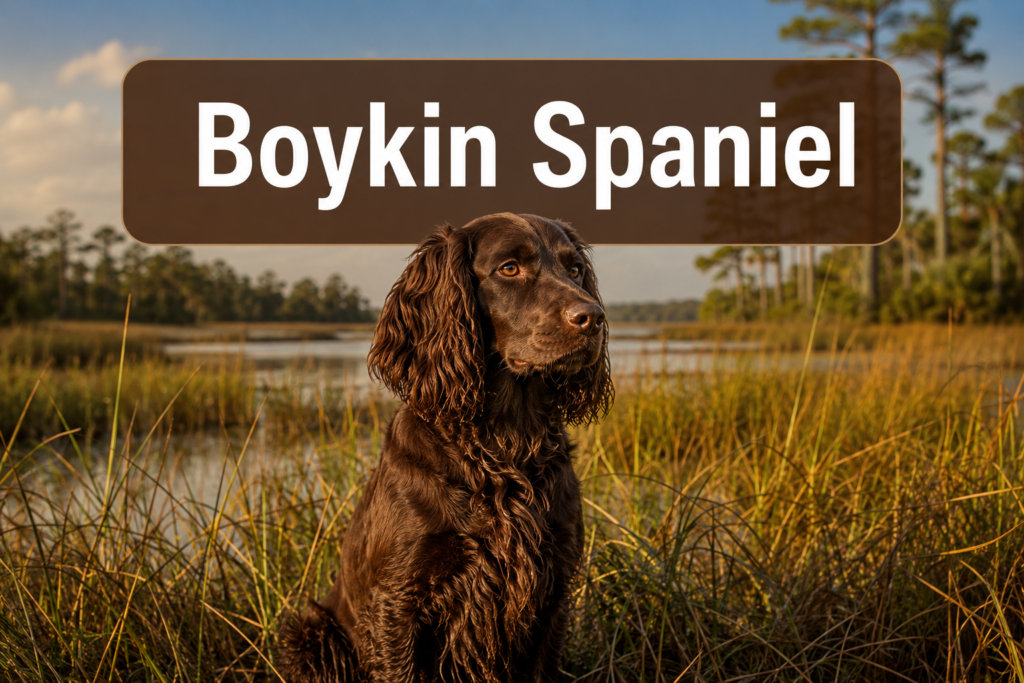
Quick Answer: The Boykin Spaniel is a medium-sized sporting dog bred in South Carolina, prized for its friendly temperament, strong hunting instincts, and adaptability as a family companion. It stands out among spaniel breeds for its compact size, rich chocolate-brown coat, and exceptional retrieving ability in both water and upland fields.
Key Takeaways
- The Boykin Spaniel is South Carolina’s official state dog, developed in the early 1900s for turkey and waterfowl hunting.
- Adult Boykins typically weigh 25 to 40 pounds and stand 14 to 18 inches tall, making them a manageable size for most households.
- They are energetic, affectionate, and highly trainable, but require consistent daily exercise to prevent boredom-related behavior problems.
- Common health concerns include hip dysplasia, exercise-induced collapse (EIC), and eye conditions; reputable breeders test for all three.
- Grooming needs are moderate: weekly brushing, regular ear cleaning, and occasional trimming of the wavy coat.
- Puppy prices from health-tested breeders typically range from $1,000 to $2,000 in 2026.
- Boykin Spaniels are excellent family dogs and generally get along well with children and other pets.
- They are not heavy barkers by spaniel standards, but they do vocalize when bored or under-exercised.
What Is a Boykin Spaniel?
The Boykin Spaniel is an American-bred sporting dog developed in the Wateree River Swamp region of South Carolina in the early twentieth century. The breed was created to hunt wild turkeys and retrieve waterfowl from small boats called “section boats,” where a larger dog would have been impractical.
Origin story: A stray dog named “Dumpy” found near a Spartanburg, South Carolina church is widely credited as the founding dog of the breed. Whit Boykin developed Dumpy’s descendants into a consistent hunting type, and the breed now bears his name. The Boykin Spaniel Society was established in 1977, and the American Kennel Club (AKC) formally recognized the breed in 2009.
Physical traits at a glance:
- Weight: 25 to 40 pounds (males slightly larger)
- Height: 14 to 18 inches at the shoulder
- Coat: Wavy to curly, medium length, rich liver or chocolate brown
- Eyes: Amber to brown
- Ears: Long, flat, set above the eye line
- Tail: Docked in working dogs, natural in show or companion dogs
The Boykin is often described as “the dog that doesn’t rock the boat”, a nod to its practical origins and calm, cooperative nature.
Boykin Spaniel Temperament and Personality
Boykin Spaniels are enthusiastic, affectionate, and eager to please. They bond closely with their families and tend to be friendly with strangers rather than reserved or suspicious.
Key personality traits include:
- High energy: Boykins are working dogs at heart. They need an outlet for physical and mental energy every day.
- Trainability: They respond well to positive reinforcement and pick up commands quickly, which makes them popular with first-time sporting dog owners.
- Sociability: Most Boykins get along well with children, other dogs, and even cats when properly socialized from puppyhood.
- Sensitivity: This breed does not respond well to harsh correction. Firm, consistent, reward-based training works far better.
“The Boykin Spaniel combines the drive of a hunting dog with the warmth of a family companion, a combination that’s harder to find than it sounds.”
If left alone for long periods without exercise or mental stimulation, Boykins can develop destructive habits such as chewing or excessive barking. They thrive in active households.
Are Boykin Spaniels Good Family Pets?
Yes, Boykin Spaniels are excellent family dogs for active households. They are gentle with children, playful without being rough, and adaptable to both rural and suburban environments, provided they get enough exercise.
They do best in homes where:
- Someone is home for a significant part of the day
- Daily outdoor activity (at least 60 minutes) is realistic
- Children are old enough to understand how to interact respectfully with dogs
- The yard is securely fenced, as Boykins have a strong prey drive
Boykins are not well-suited to apartment living unless the owner commits to multiple long walks and regular off-leash time. If you’re comparing options for smaller living spaces, check out this guide to best small dogs for apartments for alternatives that may fit better.
Boykin Spaniel vs Cocker Spaniel and English Springer Spaniel
The Boykin Spaniel is most commonly compared to the American Cocker Spaniel and the English Springer Spaniel. Here is how they differ across the most important categories:
| Trait | Boykin Spaniel | Cocker Spaniel | English Springer Spaniel |
|---|---|---|---|
| Weight | 25-40 lbs | 20-30 lbs | 40-50 lbs |
| Coat color | Chocolate/liver only | Many colors | Liver/white, black/white |
| Energy level | High | Moderate | High |
| Hunting use | Water and upland | Primarily upland | Upland flushing |
| Grooming demand | Moderate | High | Moderate |
Choose a Boykin if you want a compact, all-purpose hunting dog that doubles as a family companion and you don’t mind a high-energy daily routine. Choose a Cocker Spaniel if you want a slightly calmer, more lap-friendly dog. The English Cocker Spaniel is worth considering if you prefer a slightly larger, more versatile flushing dog with European field lines.
Boykin Spaniel Health Problems and Lifespan
The Boykin Spaniel has a typical lifespan of 10 to 15 years. The breed is generally hardy, but several inherited conditions are worth knowing before purchasing or adopting.
Common health concerns:
- Hip dysplasia: A malformation of the hip joint that can lead to arthritis. Reputable breeders screen breeding dogs with OFA (Orthopedic Foundation for Animals) evaluations.
- Exercise-induced collapse (EIC): A genetic condition where intense exercise triggers sudden muscle weakness or collapse. DNA testing can identify carriers.
- Eye conditions: Progressive retinal atrophy (PRA) and other eye disorders occur in the breed. Annual eye exams by a board-certified veterinary ophthalmologist are recommended.
- Pulmonic stenosis: A congenital heart defect seen at higher rates in Boykins than in many other breeds. Cardiac screening is advised before breeding.
- Ear infections: The long, floppy ears trap moisture, especially in dogs that swim frequently. Weekly ear checks and cleaning reduce infection risk significantly.
Buyer tip: Always ask breeders for OFA hip, cardiac, and eye clearances, plus DNA test results for EIC. A reputable breeder will provide these without hesitation.
Boykin Spaniel Grooming and Shedding
Boykin Spaniels shed moderately year-round, with heavier shedding in spring and fall. Their wavy to curly coat requires consistent maintenance to prevent matting, but it is far less demanding than a Cocker Spaniel’s coat.
Grooming routine:
- Brushing: Two to three times per week with a slicker brush or pin brush; daily during shedding season
- Bathing: Every four to six weeks, or after heavy field work or swimming
- Trimming: Light trimming around the ears, paws, and belly every six to eight weeks; professional grooming two to four times per year
- Ear cleaning: Weekly, especially for dogs that swim regularly
- Nail trimming: Every three to four weeks
The Boykin is not a hypoallergenic breed. If allergies are a concern, browse this list of best hypoallergenic dogs for apartments for alternatives.
Boykin Spaniel Training Difficulty and Exercise Requirements
Boykin Spaniels are moderately easy to train. They rank among the more responsive spaniel breeds because of their strong desire to work alongside humans and their sensitivity to handler feedback.
Training tips:
- Start obedience training at 8 to 10 weeks old
- Use short, reward-based sessions (10 to 15 minutes) to hold attention
- Socialize early with different people, dogs, sounds, and environments
- Avoid repetitive drills; Boykins get bored quickly with monotony
- Channel prey drive into structured fetch, retrieving games, or nose work
Exercise needs: Plan for at least 60 to 90 minutes of active exercise per day. This can include swimming, fetch, trail walks, or hunting. A Boykin that doesn’t get enough physical activity becomes restless and may develop nuisance behaviors.
Common behavior issues tied to insufficient exercise:
- Destructive chewing
- Excessive barking or whining
- Jumping on guests
- Counter-surfing
Do Boykin Spaniels Bark a Lot?
Boykin Spaniels are not considered excessive barkers compared to many other sporting breeds. They will alert bark when strangers approach, but they do not typically bark continuously without cause.
Barking tends to increase when the dog is:
- Under-exercised or bored
- Left alone for long stretches
- Under-stimulated mentally
A well-exercised Boykin in an active household is generally a quiet, calm house dog in the evenings. If barking becomes a persistent issue, the root cause is almost always insufficient physical or mental activity.
Boykin Spaniel Hunting Ability
The Boykin Spaniel is a capable, versatile hunting dog. It was purpose-built for flushing and retrieving wild turkeys and ducks in the swampy terrain of the American South.
Hunting strengths:
- Strong natural retrieve instinct, both on land and in water
- Compact enough to work from small boats and blinds
- Excellent nose for tracking upland game birds
- Enthusiastic swimmer with a water-resistant coat
The Boykin is not as fast or wide-ranging as a Pointer or Setter, but for close-working upland and waterfowl hunting, it performs exceptionally well. Many hunters also use the breed for dove and quail. For a comparison with other American hunting breeds, see the Bluetick Coonhound and Bloodhound profiles.
How Much Does a Boykin Spaniel Cost?
In 2026, Boykin Spaniel puppies from health-tested, AKC-registered breeders typically cost between $1,000 and $2,000. Puppies from proven hunting lines or champion show stock can reach $2,500 or more.
Cost breakdown:
- Purchase price: $1,000 to $2,500
- Initial vet visit, vaccines, and microchip: $200 to $400
- Spay or neuter: $300 to $600
- First-year supplies (crate, leash, food, grooming): $500 to $800
- Annual ongoing costs (food, vet, grooming): $1,200 to $2,000 per year
For a broader look at what dog ownership costs over time, this guide on most affordable dog breeds to own and maintain provides useful context.
Where to Buy a Boykin Spaniel Puppy
The most reliable sources for a healthy Boykin Spaniel puppy are:
- Boykin Spaniel Society (BSS) breeder referrals, The BSS maintains a breeder directory and code of ethics at boykinspanielsociety.com.
- AKC Marketplace, Lists AKC-registered litters with health testing documentation.
- Breed-specific rescues, The Boykin Spaniel Rescue organization places adult dogs in need of homes.
Red flags to avoid:
- Breeders who cannot provide OFA, EIC, and eye clearances
- Puppies available immediately with no waiting list
- Prices significantly below $800 with no health guarantees
- No option to visit the breeding facility or meet the dam
Avoid purchasing from pet stores or unverified online listings, as these sources rarely prioritize genetic health testing.
Conclusion
The Boykin Spaniel is a well-rounded breed that earns its reputation as both a serious hunting dog and a devoted family companion. Its manageable size, friendly nature, and strong trainability make it a solid choice for active owners who can commit to daily exercise and consistent early training.
Actionable next steps for prospective Boykin owners:
- Contact the Boykin Spaniel Society for a list of health-tested breeders in your region.
- Ask every breeder for OFA hip, cardiac clearance, EIC DNA results, and annual eye exam records before placing a deposit.
- Budget for at least 60 to 90 minutes of daily exercise and plan for two to three brushing sessions per week.
- Enroll in a puppy obedience class within the first two weeks of bringing your dog home.
- If hunting is a goal, seek out a breeder with proven field lines and consider working with a professional gun dog trainer in the first year.
For owners exploring other sporting or working breeds, the Border Collie, Border Terrier, and Berger Picard are worth comparing depending on your activity level and living situation.
Frequently Asked Questions
Is the Boykin Spaniel a good dog for first-time owners?
Yes, with some caveats. Boykins are trainable and affectionate, but their high energy level means first-time owners must be prepared for a serious daily exercise commitment. They are not a low-maintenance breed.
How long do Boykin Spaniels live?
The typical lifespan is 10 to 15 years. Dogs from health-tested lines with proper diet and regular veterinary care tend to reach the higher end of that range.
Do Boykin Spaniels shed a lot?
They shed moderately year-round and more heavily in spring and fall. Regular brushing two to three times per week keeps shedding manageable.
Can a Boykin Spaniel live in an apartment?
It is possible but not ideal. Boykins need substantial daily exercise. Apartment owners would need to commit to multiple long walks and regular off-leash time to keep the dog mentally and physically satisfied.
Are Boykin Spaniels good with cats?
Many Boykins coexist peacefully with cats when raised together from puppyhood. However, their prey drive means introductions should be gradual and supervised, especially with adult dogs meeting cats for the first time.
What is the difference between a Boykin Spaniel and a Cocker Spaniel?
The Boykin is slightly larger, bred exclusively in chocolate/liver brown, and was developed for hunting in water and upland fields. The American Cocker Spaniel comes in many colors, has a longer show coat, and was refined more as a companion breed over the past century.
How much exercise does a Boykin Spaniel need each day?
At minimum, 60 to 90 minutes of active exercise. This breed does best with activities that combine physical exertion and mental engagement, such as fetch, swimming, or structured hunting work.
Are Boykin Spaniels prone to separation anxiety?
They can be. Boykins bond closely with their families and do not thrive when left alone for extended periods. Crate training and gradual alone-time conditioning from puppyhood help prevent anxiety from developing.
Is the Boykin Spaniel recognized by the AKC?
Yes. The American Kennel Club officially recognized the Boykin Spaniel in 2009, placing it in the Sporting Group.
What is the Boykin Spaniel’s state dog?
The Boykin Spaniel is the official state dog of South Carolina, designated in 1985.
References
- American Kennel Club. (2009). Boykin Spaniel Breed Standard. akc.org
- Boykin Spaniel Society. (2023). Health Testing Requirements and Breeder Code of Ethics. boykinspaniel.org