
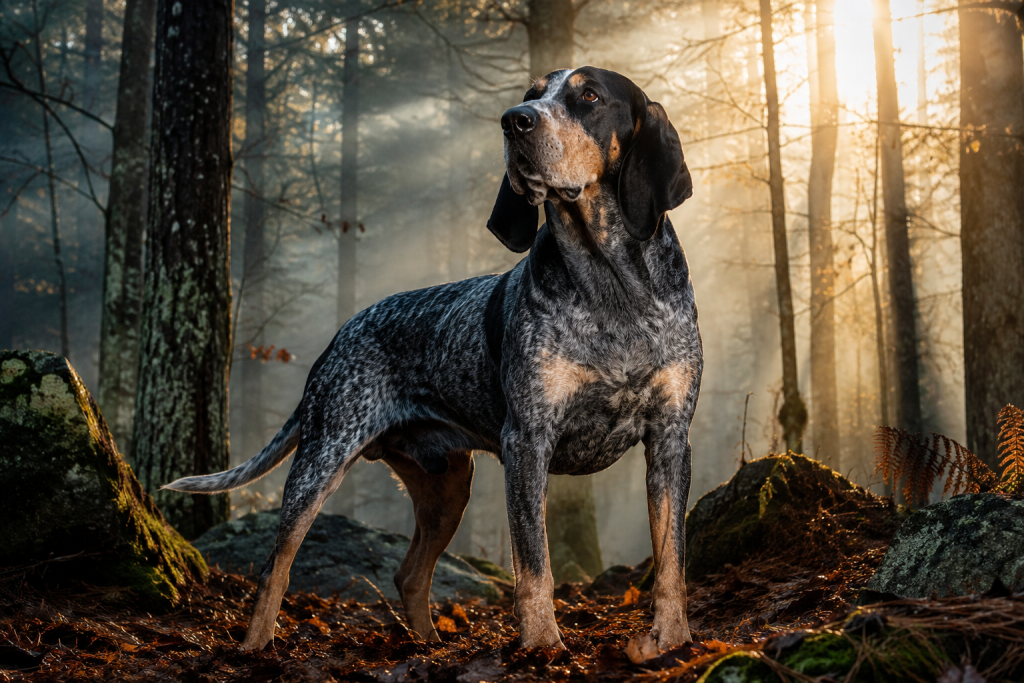
Quick Answer: The Bluetick Coonhound is a large, athletic scent hound known for its distinctive blue-ticked coat and relentless tracking ability. Males weigh 55-80 pounds and stand 22-27 inches tall, while females weigh 45-65 pounds and stand 21-25 inches tall. This breed is intelligent, loyal, and energetic, making it best suited for active families who can provide plenty of exercise and breed-specific training. [1]
Key Takeaways:
- Bluetick Coonhounds are large scent hounds, with males weighing 55-80 pounds and females 45-65 pounds. [1]
- Their average lifespan is 11-12 years. [1]
- They are highly vocal dogs with a loud, distinctive bay developed for hunting. [3]
- This breed requires extensive daily exercise and thrives in homes with secure outdoor space. [3]
- Common health concerns include bloat, hip dysplasia, and hypothyroidism. [2]
- Bluetick Coonhounds are intelligent but can be stubborn, requiring consistent positive reinforcement training. [3]
- They descend from French staghounds gifted to George Washington by the Marquis de Lafayette. [4]
- The AKC recognized the breed in 2009. [4]
- Their short coat is relatively low-maintenance but does shed regularly. [3]
- They are not ideal for apartment living due to their size, energy, and vocal tendencies. [3]
What Is a Bluetick Coonhound?
The Bluetick Coonhound is a large American scent hound bred primarily for tracking and treeing raccoons, recognized for its mottled blue-black coat and exceptional nose. This breed combines athleticism with a deep-rooted hunting heritage that stretches back to the earliest days of the United States. [4]
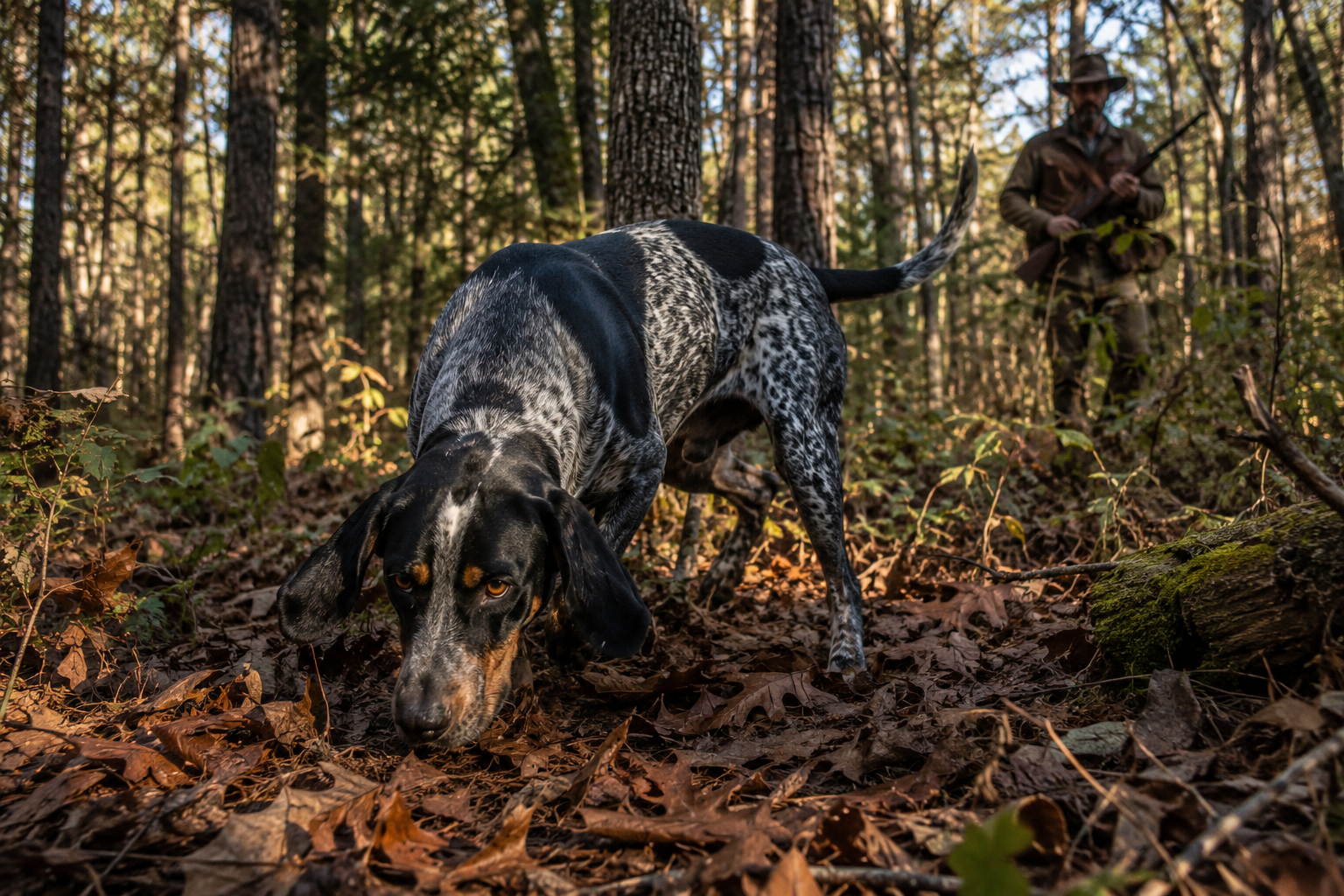
History and Hunting Ability: The Bluetick Coonhound descends from French staghounds gifted to George Washington by the Marquis de Lafayette in the late 1700s. These dogs were crossed with English Foxhounds and other scenthounds to create a rugged, cold-nosed tracker capable of following old, faint trails. The breed was officially recognized by the American Kennel Club (AKC) in 2009 and is one of six coonhound breeds recognized by the organization. [4]
Bluetick Coonhound Size and Weight: Males typically weigh between 55-80 pounds and stand 22-27 inches tall at the shoulder. Females are slightly smaller, weighing 45-65 pounds and standing 21-25 inches tall. Their muscular, athletic build reflects their working heritage. [1]
If you are exploring other American hunting breeds, you might also be interested in the American Foxhound or the Black and Tan Coonhound.
Bluetick Coonhound Temperament and Personality
Bluetick Coonhounds are intelligent, energetic, and deeply loyal dogs with a strong prey drive and an independent streak shaped by centuries of hunting work. They form close bonds with their families and are known for being affectionate at home, even while remaining relentless and focused in the field. [1]
Key personality traits include:
- Loyal and affectionate with family members
- Intelligent and problem-solving, which can sometimes look like stubbornness
- Strong prey drive, they will follow scents relentlessly
- Friendly but reserved with strangers
- Highly energetic and always ready for activity
This breed thrives on mental stimulation and physical activity. Without enough engagement, your furry friend may develop undesirable behaviors like destructive chewing or excessive baying. For a seasoned canine enthusiast, the Bluetick’s intelligence and drive are rewarding to work with. For a first-time dog owner, the breed’s independence can present a steeper learning curve. [3]
Are Bluetick Coonhounds Good Family Pets?
Bluetick Coonhounds can make excellent family pets for active households, but they are not the right fit for every home. They do best with families who understand hound behavior and can provide consistent training, ample exercise, and secure outdoor space. [3]
Pros as family dogs:
- Gentle and affectionate with children when properly socialized
- Loyal and protective of their family
- Playful and energetic, great for active kids
Cons to consider:
- Highly vocal, which may not suit noise-sensitive neighborhoods
- Strong prey drive means small pets like cats may be at risk
- Large size and energy can overwhelm very young children
- Requires significant time commitment for exercise and training
If you are weighing your options, check out our dog pros and cons section for more breed comparisons. For families looking for a quieter companion, our guide to low-energy dog breeds for seniors and retirees offers alternatives that may better suit a calmer lifestyle.
Bluetick Coonhound Exercise Requirements and Apartment Living
Bluetick Coonhounds require extensive daily exercise, typically 60 to 90 minutes of vigorous activity, and are generally not well-suited for apartment living due to their size, energy, and vocal tendencies. [3]
Exercise needs:
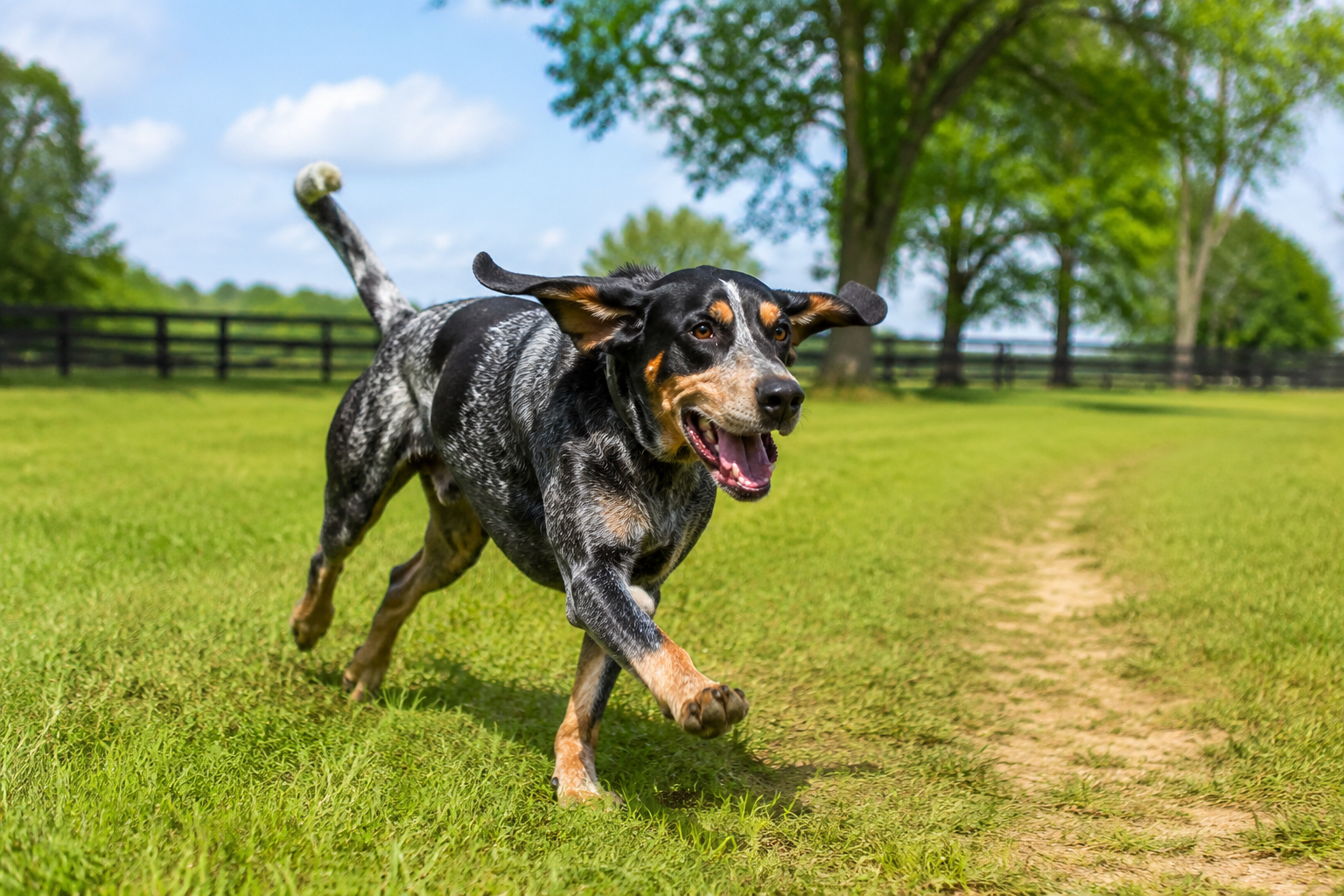
- Daily activity: 60-90 minutes of running, hiking, or active play
- Mental stimulation: Scent games, puzzle toys, and tracking exercises
- Off-leash caution: Always exercise on leash or in a securely fenced area, as they will follow scents without hesitation [3]
Apartment living: While not impossible, apartment living is challenging for this breed. Their loud baying can disturb neighbors, and their energy levels demand space that most apartments cannot provide. If you live in an apartment, you must commit to multiple daily outdoor exercise sessions and consider whether your living situation can accommodate a vocal, high-energy dog. [3]
Decision rule: Choose a Bluetick Coonhound only if you have a securely fenced yard of reasonable size and a lifestyle that includes daily outdoor activity. If you live in an apartment or work long hours away from home, consider a breed better suited to smaller living spaces.
Bluetick Coonhound Training Difficulty Level
Training a Bluetick Coonhound is moderately difficult, they are intelligent and eager to please, but their independent hound nature and strong prey drive can make them stubborn and easily distracted. Consistent, positive reinforcement methods are the most effective approach. [3]
Breed-specific training tips:
- Start early: Begin socialization and basic commands as soon as you bring your puppy home
- Use positive reinforcement: Reward-based training works best; avoid harsh corrections that can damage trust
- Manage distractions: Train in low-distraction environments first, then gradually add challenges
- Leash training is essential: Their instinct to follow scents makes reliable leash manners critical
- Be patient: Hounds think independently; effective dog training requires repetition and consistency
Common mistake: Many owners underestimate the breed’s scent-driven distractibility. A Bluetick that catches an interesting smell may completely tune out commands, so recall training should be a top priority from day one. [3]
For more on American breeds and their training characteristics, explore our United States dog breeds section.
Why Does My Bluetick Coonhound Howl So Much?
Bluetick Coonhounds howl and bay loudly because they were selectively bred to vocalize while tracking and treeing game, allowing hunters to follow them through dense terrain. This vocalization is deeply ingrained in the breed and cannot be entirely trained away. [3]
Types of vocalization:
- Baying: A prolonged, melodic howl used when on a scent trail
- Alert barking: Shorter barks when they detect something unusual
- Expressive vocalizing: Groans, whines, and “talking” sounds when interacting with family
Managing excessive vocalization:
- Provide adequate exercise to reduce boredom-driven howling
- Use positive reinforcement to reward quiet behavior
- Avoid reacting to attention-seeking howling
- Understand that some vocalization is simply part of owning this breed
You cannot eliminate a Bluetick’s voice, but you can reduce unnecessary noise by meeting their exercise and mental stimulation needs consistently.
Bluetick Coonhound Shedding and Grooming Needs
Bluetick Coonhounds have a short, dense coat that sheds moderately year-round, requiring regular brushing to maintain coat condition and minimize loose hair. Their grooming needs are relatively low compared to longer-coated breeds. [3]
Grooming routine:
| Task | Frequency | Purpose |
|---|---|---|
| Brushing | 1-2 times per week | Removes loose hair, distributes oils |
| Ear cleaning | Weekly | Prevents infections in floppy ears |
| Nail trimming | Every 2-4 weeks | Prevents overgrowth and discomfort |
| Bathing | Every 2-3 months or as needed | Keeps coat clean without stripping oils |
| Dental care | Daily brushing | Prevents tartar and gum disease |
Ear care is critical: Their long, floppy ears trap moisture and debris, making them prone to infections. Check ears weekly and clean them with a veterinarian-approved solution. [3]
Preventive care: Regular grooming sessions also serve as preventive care, allowing you to spot skin issues, lumps, or parasites early. This is especially important for senior dog care, as older Blueticks may develop skin sensitivities or mobility issues that require adjusted grooming routines.
Bluetick Coonhound Health Problems and Lifespan
Bluetick Coonhounds have an average lifespan of 11-12 years and are generally hardy dogs, but they are prone to several breed-specific health conditions that require monitoring. [1][2]
Common health problems:
- Gastric torsion (bloat): A life-threatening condition where the stomach twists; feed smaller meals and avoid vigorous exercise after eating [2]
- Hip and elbow dysplasia: Joint malformations that can cause pain and mobility issues [2]
- Hypothyroidism: Underactive thyroid leading to weight gain and lethargy [2]
- Cataracts: Clouding of the eye lens that can impair vision [2]
- Patellar luxation: Kneecap dislocation causing intermittent lameness [2]
- Coonhound paralysis: A neurological condition causing temporary paralysis, often triggered by raccoon exposure [2]
- Neuronal ceroid lipofuscinosis (NCL): A rare degenerative neurological disorder [2]
Preventive care tips:
- Schedule regular veterinary check-ups at least twice yearly
- Maintain a healthy weight to reduce joint stress
- Feed a balanced, high-quality diet appropriate for large breeds
- Keep vaccinations and parasite prevention up to date
- Consider genetic testing if breeding
Bluetick Coonhound Price: How Much Do They Cost?
A Bluetick Coonhound puppy from a reputable breeder typically costs between $500 and $1,200, depending on lineage, location, and whether the dog is intended for hunting or companionship. Additional first-year costs include supplies, veterinary care, training, and food.
Cost breakdown:
| Expense | Estimated Cost |
|---|---|
| Puppy purchase | $500-$1,200 |
| Initial vet visits and vaccinations | $300-$600 |
| Spay/neuter | $200-$500 |
| Supplies (crate, bed, leash, bowls) | $200-$400 |
| Training classes | $100-$300 |
| Annual food | $400-$700 |
| Annual vet care | $200-$500 |
Adoption alternative: Bluetick Coonhounds are sometimes available through breed-specific rescues or general shelters for $150-$400, which typically includes vaccinations and spay/neuter surgery. Adoption is a cost-effective and compassionate option if you do not need a puppy from a specific lineage.
Bluetick Coonhound vs Redbone Coonhound and Similar Breeds
The Bluetick Coonhound and Redbone Coonhound are both American scenthounds bred for raccoon hunting, but they differ in coat color, size, and temperament. The Bluetick has a mottled blue-black coat and tends to be slightly larger and more cold-nosed, while the Redbone has a solid red coat and is known for a more even, sociable temperament. [4]
Comparison table:
| Trait | Bluetick Coonhound | Redbone Coonhound |
|---|---|---|
| Coat color | Blue-black ticking | Solid red |
| Weight | 45-80 lbs | 45-70 lbs |
| Scent ability | Cold-nosed (follows old trails) | Fast tracker |
| Temperament | Independent, loyal | Sociable, eager |
| Vocalization | Loud bay | Loud bay |
| AKC recognition | 2009 | 2009 |
Other similar breeds to consider:
- American English Coonhound, faster on trail, similar build
- Black and Tan Coonhound, larger, more reserved
- American Foxhound, lighter build, fox-specific hunting
Decision rule: Choose a Bluetick if you want a cold-nosed tracker with a distinctive coat and strong loyalty. Choose a Redbone if you prefer a more sociable, even-tempered hound. Choose a Black and Tan if you want a larger, more laid-back scenthound.
FAQ
How long do Bluetick Coonhounds live?
Bluetick Coonhounds have an average lifespan of 11-12 years with proper care, nutrition, and regular veterinary check-ups. [1]
Do Bluetick Coonhounds shed a lot?
They shed moderately year-round. Regular brushing 1-2 times per week helps manage loose hair and keeps the coat healthy. [3]
Are Bluetick Coonhounds aggressive?
No, they are not typically aggressive. They are friendly and loyal with family but can be reserved with strangers. Early socialization ensures a well-mannered adult dog. [3]
Can Bluetick Coonhounds live with cats?
It depends. Their strong prey drive makes them a risk around small animals like cats, especially if not raised with them from puppyhood. Careful introductions and supervision are essential. [3]
How much exercise does a Bluetick Coonhound need daily?
They need 60-90 minutes of vigorous exercise daily, plus mental stimulation through scent games and puzzle toys. Always exercise them on leash or in a securely fenced area. [3]
Are Bluetick Coonhounds easy to train?
They are intelligent but independent, making training moderately challenging. Consistent positive reinforcement and early socialization are key to success. [3]
Do Bluetick Coonhounds make good apartment dogs?
Generally, no. Their size, energy level, and loud vocalization make apartment living difficult. They thrive in homes with securely fenced yards. [3]
What health problems are common in Bluetick Coonhounds?
Common issues include bloat, hip dysplasia, hypothyroidism, cataracts, patellar luxation, and coonhound paralysis. Regular vet visits help catch and manage these conditions early. [2]
Conclusion
The Bluetick Coonhound is a loyal, intelligent, and energetic breed best suited for active families who can provide ample exercise, consistent positive reinforcement training, and a securely fenced outdoor space. While their vocal nature and independent streak require patience, they reward dedicated owners with deep loyalty and affection. Our comprehensive profiles aim to help you make the best decision for your household.
If you are considering adding a Bluetick Coonhound to your family, start by finding a reputable breeder or breed-specific rescue. Prepare your home with secure fencing, invest in quality training resources, and establish a relationship with a veterinarian for ongoing preventive care. Once you bring your canine companion home, use our Dog name Generator to find the perfect name for your new furry friend.
References
[1] Bluetick Coonhound – https://www.chewy.com/education/dog-breeds/bluetick-coonhound
[2] What To Know Bluetick Coonhounds – https://www.webmd.com/pets/dogs/what-to-know-bluetick-coonhounds
[3] Bluetick Coonhound – https://www.petmd.com/dog/breeds/bluetick-coonhound
[4] Meet Coonhound Breeds – https://www.akc.org/expert-advice/dog-breeds/meet-coonhound-breeds