
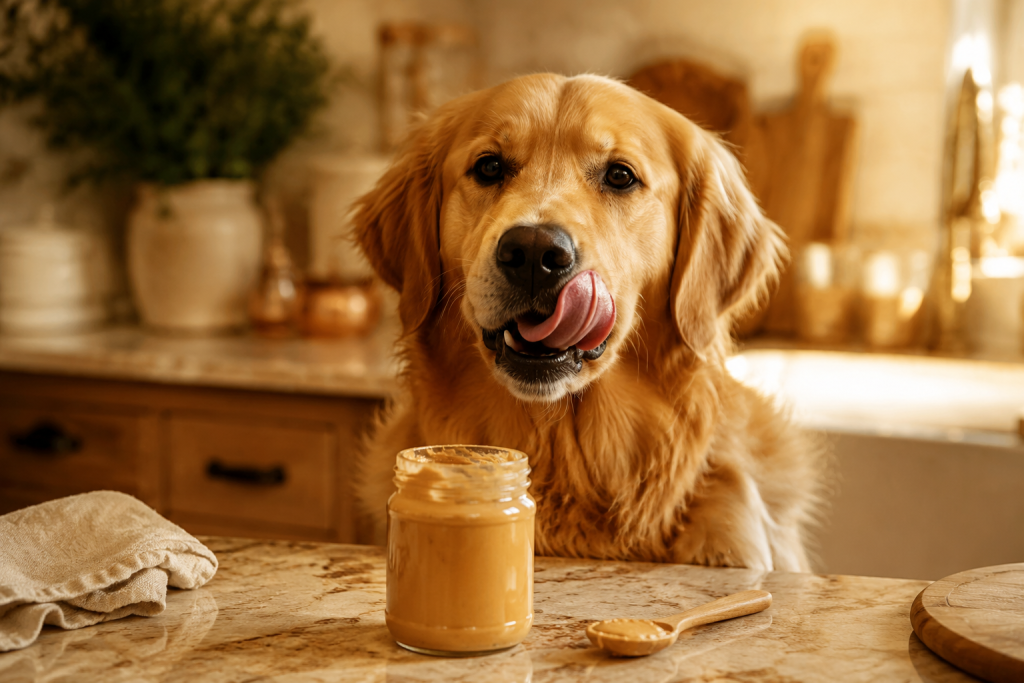
Quick Answer: Dogs like peanut butter because it delivers a powerful combination of appealing smells, sweet and fatty flavors, and a sticky texture that keeps them engaged. Their sensitive noses detect a meat-like aroma from roasted peanuts, their taste buds respond to the fat and sugar content, and the sticky consistency prolongs the experience. It’s one of the most naturally satisfying foods for a canine companion.
Key Takeaways
- Dogs are attracted to peanut butter primarily through smell, taste, and texture working together
- The roasting process gives peanuts an aroma similar to caramelized meat, which dogs find irresistible [2]
- Dogs have a natural preference for sweet and fatty foods, both of which peanut butter delivers [1]
- The sticky texture causes prolonged licking, which many dogs find self-rewarding [3]
- Peanut butter is a useful tool for training, enrichment, and bonding with your furry friend
- Always check labels: xylitol, an artificial sweetener found in some brands, is toxic to dogs [5]
- Feed peanut butter in moderation due to its high fat and calorie content [5]
- Some dogs may have peanut allergies, so introduce it slowly and watch for reactions [5]
- Natural or unsalted peanut butter with no added sweeteners is the safest choice
Why Do Dogs Like Peanut Butter? The Core Reasons
Dogs like peanut butter for three main reasons: it smells like meat, it tastes rich and slightly sweet, and its sticky texture makes eating it an extended, satisfying experience. These factors tap directly into a dog’s natural instincts around food.
The Smell Factor
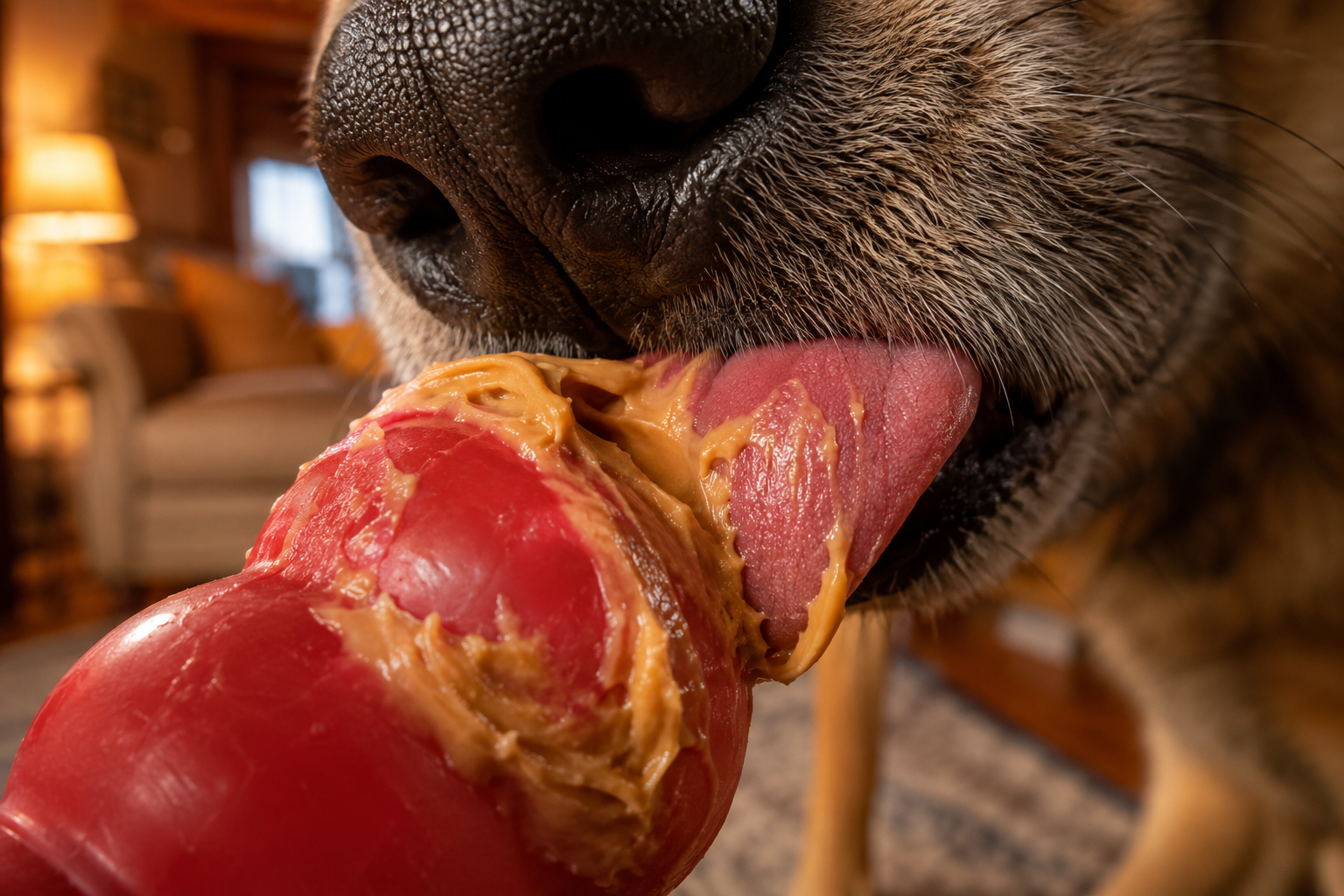
A dog’s sense of smell is estimated to be anywhere from 10,000 to 100,000 times more sensitive than a human’s. When peanuts are roasted, the Maillard reaction (the same chemical process that browns meat when cooked) produces aromatic compounds that smell remarkably similar to caramelized meat to a dog’s nose [2]. For your canine companion, opening a jar of peanut butter is nearly as exciting as smelling a piece of cooked chicken.
This is one of the biggest reasons why peanut butter works so well in training scenarios and enrichment toys. The scent alone is enough to hold your dog’s attention.
The Taste Connection
Dogs have far fewer taste buds than humans (roughly 1,700 compared to a human’s 9,000), but they do have receptors specifically tuned to sweetness and fat. Peanut butter delivers both.
The natural sugars in peanuts satisfy a dog’s preference for sweet flavors, while the high fat content signals energy-dense nutrition [1]. Domesticated dogs have evolved over thousands of years to digest starches and fats more efficiently than their wild ancestors, which makes peanut butter genuinely palatable and digestible for most dogs [4].
The Texture Experience
The sticky, thick consistency of peanut butter is a key part of its appeal. When a dog laps it up, the paste clings to the roof of the mouth and the tongue, triggering extended licking behavior [3].
That licking action releases calming hormones in dogs, making the experience genuinely enjoyable rather than just tasty. It’s part of why peanut butter-stuffed toys can keep a dog occupied for a surprisingly long time.
How Peanut Butter Taps Into Your Dog’s Natural Instincts
Dogs instinctively seek out calorie-dense, high-fat, high-protein foods because their evolutionary history rewarded finding and consuming energy-rich meals. Peanut butter is rich in both fats and proteins, nutrients that dogs are naturally wired to pursue [2].
This instinct goes beyond simple hunger. Even well-fed dogs respond enthusiastically to peanut butter because the nutritional profile matches what their biology tells them is valuable. It’s similar to why dogs like butt scratches or other sensory pleasures that tap into deeply rooted canine responses.
Key nutritional draws in peanut butter:
- Protein: Supports muscle maintenance and overall health
- Healthy fats: Provide sustained energy and support coat health
- Natural sugars: Trigger the brain’s reward response
- Vitamins B and E: Present in small amounts and beneficial for dogs
Is Peanut Butter Actually Good for Dogs?
Peanut butter can be a healthy treat for dogs when chosen carefully and fed in moderation. The key word is moderation. Because peanut butter is calorie-dense, too much of it can contribute to weight gain and, over time, obesity-related health problems [5].
A general guideline is that treats of any kind should make up no more than 10% of your dog’s daily caloric intake. For most medium-sized dogs, that translates to roughly one teaspoon of peanut butter per day as a treat.
What to look for on the label:
- No xylitol (also listed as “sugar alcohol” or “birch sugar”) — this artificial sweetener is highly toxic to dogs [5]
- No added salt or very low sodium
- No added sugars or artificial sweeteners of any kind
- Short ingredient list: ideally just peanuts, or peanuts and a small amount of palm oil
If you’re curious about other foods that are safe or unsafe for dogs, our guide on whether dogs can eat banana chips covers similar label-reading advice.
Can All Dogs Eat Peanut Butter?
Most dogs can enjoy peanut butter safely, but there are important exceptions. While peanut allergies in dogs are rare, they do occur. Signs of an allergic reaction include itching, skin redness, swelling around the face, vomiting, or diarrhea [5].
If you’re introducing peanut butter to your furry friend for the first time, start with a very small amount and wait 24 hours before offering more.
Dogs with the following conditions should avoid peanut butter or only have it under veterinary guidance:
- Pancreatitis: The high fat content can trigger flare-ups
- Obesity or weight management issues: The calorie load adds up quickly
- Kidney disease: Some peanut butters contain sodium levels that can stress kidneys
- Known nut sensitivities: Introduce with extra caution
For dogs on special diets, always check with your vet before adding peanut butter as a regular treat. This is especially relevant for senior dog care, where dietary management becomes more important as your dog ages.
Why Do Dogs Like Peanut Butter So Much in Training?
Peanut butter is one of the most effective high-value rewards in positive, effective dog training because it combines three powerful motivators: smell, taste, and texture. Dogs that are difficult to motivate with dry kibble or standard treats often respond immediately to peanut butter.
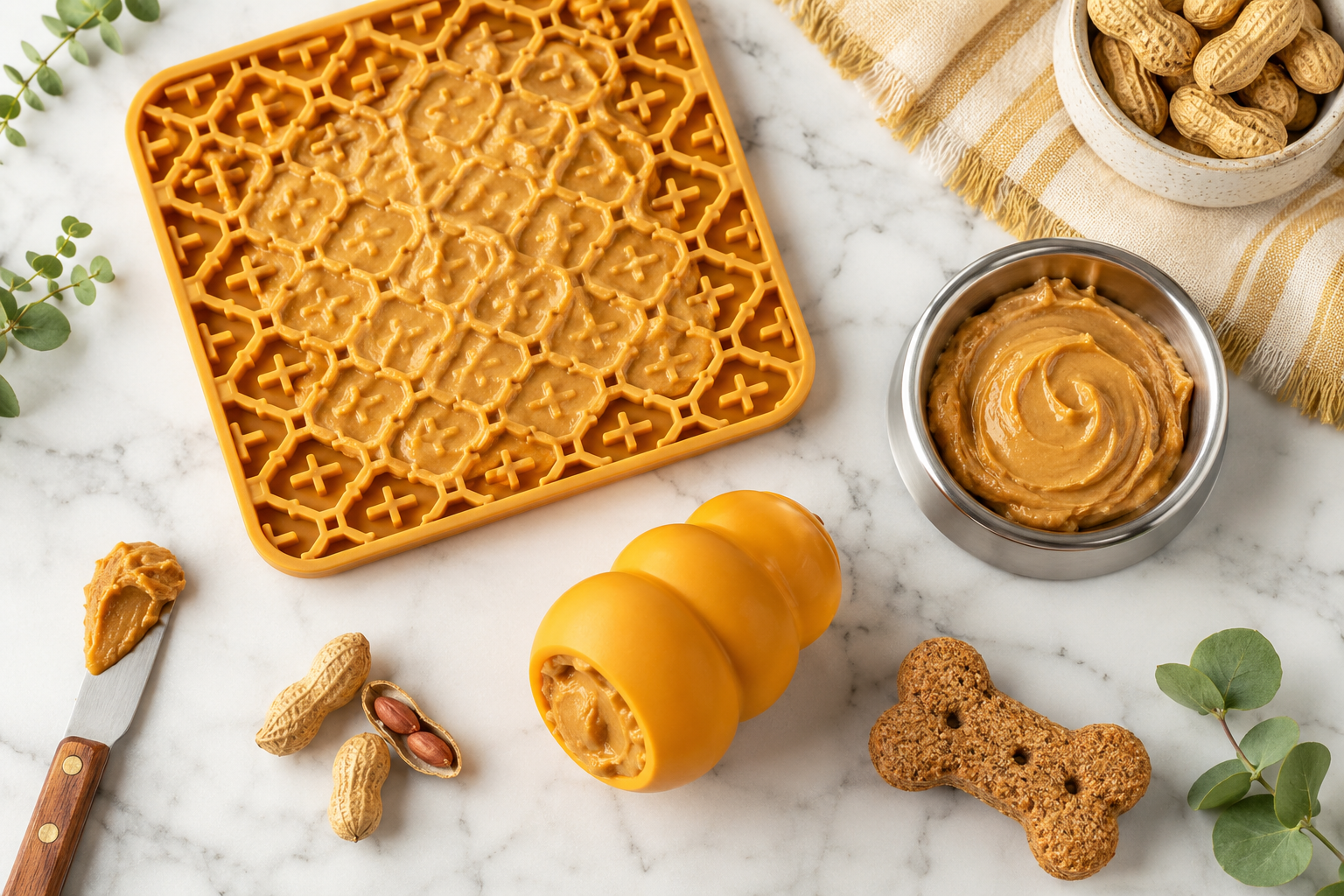
Practical training uses for peanut butter:
- Lick mats: Spread a thin layer to keep your dog calm during grooming, nail trims, or vet visits
- Kong toys: Stuff and freeze for a long-lasting enrichment activity that reduces boredom
- Pill hiding: Wrap medication in a small amount of peanut butter to make it more palatable
- Focus training: Use a peanut butter-tipped spoon to guide attention during basic commands
The act of sharing peanut butter also strengthens the bond between dogs and their owners. When your dog associates you with something that smells and tastes this good, it reinforces trust and positive behavior [1].
This is why first-time dog owners often discover peanut butter early in their training journey — it works reliably across most breeds and temperaments.
Understanding why dogs like you in the first place involves many of the same reward pathways that peanut butter activates.
How Much Peanut Butter Should You Give Your Dog?
Moderation is the most important principle when feeding peanut butter to dogs. The high fat and calorie content means that even a treat this appealing needs to be rationed carefully [5].
| Dog Size | Approximate Weight | Suggested Maximum |
|---|---|---|
| Small | Under 20 lbs | 1/2 teaspoon per day |
| Medium | 20-50 lbs | 1 teaspoon per day |
| Large | 50-90 lbs | 1-2 teaspoons per day |
| Extra Large | Over 90 lbs | Up to 1 tablespoon per day |
These are general estimates, not veterinary prescriptions. Your dog’s specific caloric needs depend on their age, activity level, and overall health. Dogs with conditions like pancreatitis or those in senior dog care programs may need stricter limits. Always consult your vet if you’re unsure.
Why Do Dogs Like Peanut Butter More Than Other Nut Butters?
Peanut butter tends to outperform other nut butters with dogs primarily because of its aroma profile. The roasting process for peanuts produces a particularly strong, meat-adjacent smell that other nuts don’t replicate as effectively [2].
Almond butter, for example, has a milder scent and a different fat composition that doesn’t trigger the same enthusiastic response in most dogs.
Peanut butter is also the most widely available and affordable option, which is why it became the default choice for dog owners and trainers decades ago. Its thick, spreadable texture also happens to be ideal for lick mats and Kong toys in a way that thinner nut butters aren’t.
If you’re exploring other nutrition questions for your canine companion, our article on whether dogs can eat prunes covers another common pantry item that dog owners ask about.
Conclusion
Understanding why do dogs like peanut butter comes down to biology, instinct, and sensory experience working together. The roasted aroma mimics meat, the fat and sugar content satisfies deep nutritional instincts, and the sticky texture creates an extended, calming licking experience that dogs genuinely enjoy.
Actionable next steps for dog owners in 2026:
- Check your current peanut butter label for xylitol and high sodium before offering it to your dog
- Start small if your furry friend has never had peanut butter, and watch for any allergic reactions over 24 hours
- Use it strategically in training, enrichment toys, or to ease stressful situations like grooming
- Stick to the portion guidelines based on your dog’s size to avoid excess calorie intake
- Choose natural peanut butter with minimal ingredients for the safest option
Peanut butter is one of the simplest, most effective tools in a dog owner’s toolkit. Used thoughtfully, it supports positive training, mental enrichment, and the bond between you and your canine companion. Just keep the jar out of reach between treat times.
For more insights into your dog’s behavior and what makes them tick, explore why dogs lick ears and why dogs go under your legs — two other common canine behaviors with surprisingly fascinating explanations.
Frequently Asked Questions
Why do dogs go crazy for peanut butter?
Dogs respond intensely to peanut butter because it combines a meat-like roasted aroma, sweet and fatty flavors, and a sticky texture that prolongs the eating experience. All three factors activate a dog’s natural food-seeking instincts simultaneously.
Is it okay to give dogs peanut butter every day?
Small amounts daily are generally safe for healthy dogs, but the high fat content means daily servings should be kept small (half a teaspoon to one teaspoon depending on size). Dogs with weight issues or pancreatitis should avoid daily servings.
What peanut butter is toxic to dogs?
Any peanut butter containing xylitol (an artificial sweetener) is toxic to dogs and can cause a dangerous drop in blood sugar or liver failure. Always read the ingredient label before sharing.
Can puppies eat peanut butter?
Yes, puppies can have peanut butter in very small amounts, provided it contains no xylitol. Because puppies have smaller bodies and developing digestive systems, keep portions minimal and introduce it gradually.
Why does my dog lick peanut butter off the roof of their mouth for so long?
The sticky texture of peanut butter clings to the palate and tongue, making it physically difficult to remove quickly. The extended licking this triggers also releases calming hormones, which is why dogs seem so focused and content during the process.
Does peanut butter help with dog training?
Yes. Peanut butter is considered a high-value reward in positive, effective dog training because its strong scent and rich taste motivate even reluctant learners. It’s especially useful for luring, focus work, and rewarding calm behavior during stressful situations.
Are there dogs that don’t like peanut butter?
While uncommon, some dogs simply aren’t interested in peanut butter. Individual taste preferences vary, and dogs with peanut sensitivities or allergies may instinctively avoid it. If your dog shows no interest, other high-value treats work just as well.
Can peanut butter cause diarrhea in dogs?
In large amounts, the high fat content in peanut butter can cause digestive upset including diarrhea or vomiting. Stick to recommended portion sizes and introduce it slowly to avoid gastrointestinal issues.
References
[1] Dogs Like Peanut Butter – https://www.milkbone.com/dog-blog/dogs-like-peanut-butter
[2] Why Do Dogs Like Peanut Butter – https://www.petscare.com/en-ca/news/faq/why-do-dogs-like-peanut-butter
[3] Why Do Dogs Lick So Much After Eating Peanut Butter – https://enviroliteracy.org/why-do-dogs-lick-so-much-after-eating-peanut-butter/
[4] Why Do Dogs Love Peanut Butter So Much – https://www.dogster.com/dog-nutrition/why-do-dogs-love-peanut-butter-so-much
[5] Can Dogs Eat Peanut Butter – https://www.petmd.com/dog/nutrition/can-dogs-eat-peanut-butter