
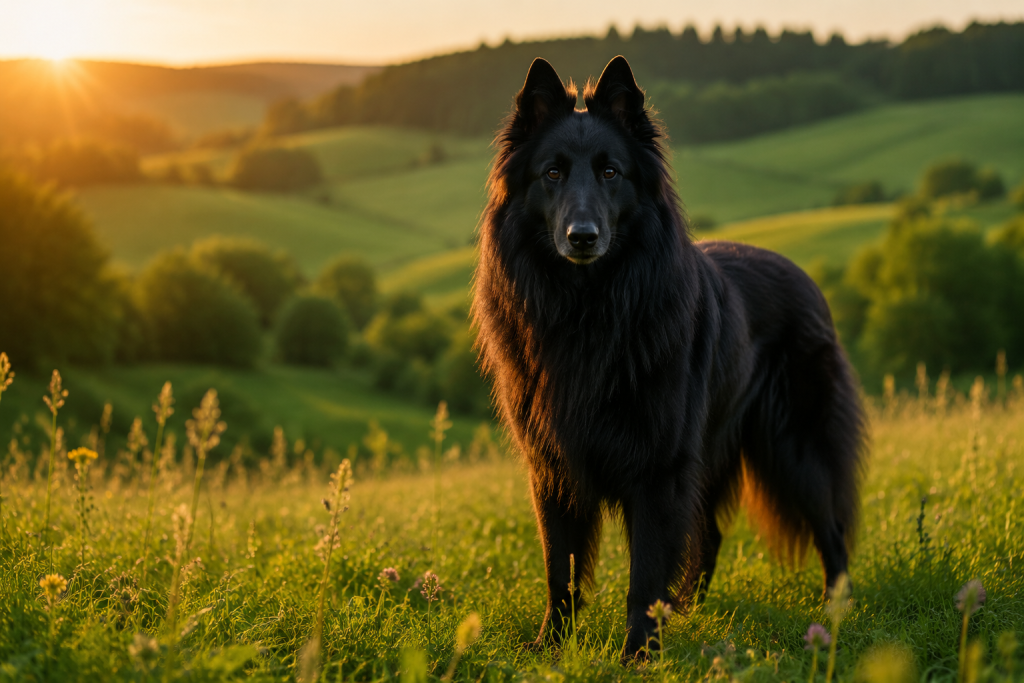
Quick Answer: The Belgian Sheepdog, also known as the Groenendael, is a highly intelligent, loyal, and energetic herding breed recognized by the American Kennel Club. Males stand 24-26 inches tall and weigh 55-75 pounds, with a life expectancy of 12-14 years. This breed thrives with active owners who can provide consistent training, daily exercise, and mental stimulation. It is not the right fit for passive or first-time dog owners who prefer a low-maintenance companion.
Key Takeaways
- The Belgian Sheepdog is one of four Belgian herding breeds, distinguished by its striking all-black double coat.
- In November 2025, a Belgian Sheepdog named Soleil won Best in Show at the National Dog Show, beating over 1,900 competitors.
- This breed needs at least 60-90 minutes of vigorous exercise every day and does poorly when left alone for long periods.
- Belgian Sheepdogs are prone to hip dysplasia, epilepsy, and progressive retinal atrophy, so regular vet checkups matter.
- They respond exceptionally well to positive reinforcement and are considered one of the more trainable herding breeds.
- Grooming requires brushing 2-3 times per week, with more frequent sessions during seasonal shedding.
- Apartment living is possible but only realistic if the owner commits to serious daily outdoor activity.
- The average puppy price from a reputable breeder ranges from $1,500 to $3,500.
What Exactly Is a Belgian Sheepdog Breed?
The Belgian Sheepdog, officially known as the Groenendael, is one of four herding varieties developed in Belgium during the late 19th century. The AKC recognizes it as a distinct breed within the Herding Group, defined by its long, dense black coat, athletic build, and sharp intelligence. [4]
Originating as a livestock herder and guardian, this breed quickly proved its worth in police work, search and rescue, and military service. [7] Today, Belgian Sheepdogs also serve as therapy dogs and competitive show dogs. In November 2025, a Belgian Sheepdog named Soleil, handled by Daniel Martin from Princeton, North Carolina, took Best in Show at the 24th Annual National Dog Show presented by Purina, outcompeting more than 1,900 dogs. [1]
The four Belgian varieties are the Groenendael (Belgian Sheepdog), the Belgian Malinois, the Belgian Tervuren, and the Belgian Laekenois. Each shares similar working instincts but differs in coat type and color.
Key physical stats:
- Height: 22-26 inches (females on the lower end)
- Weight: 45-75 pounds
- Life expectancy: 12-14 years
- Coat: Long, straight, black double coat
Belgian Sheepdog vs German Shepherd: Which Is Better?
Neither breed is universally better — the right choice depends entirely on your lifestyle and experience level. Belgian Sheepdogs are typically lighter, more agile, and more sensitive to handler tone, while German Shepherds tend to be slightly more tolerant of inconsistent training and better suited to novice owners.
For a detailed side-by-side breakdown, our guide on Belgian Malinois vs German Shepherd covers the Belgian herding family against the GSD in depth.
| Feature | Belgian Sheepdog | German Shepherd |
|---|---|---|
| Trainability | Very high, sensitive | Very high, more forgiving |
| Energy level | Extremely high | High |
| Coat maintenance | High (long black coat) | Moderate to high |
| Family friendliness | Good with proper socialization | Generally good |
| Best for | Experienced, active owners | Active owners, including some beginners |
| AKC popularity rank (2026) | #173 | Top 5 |
Choose the Belgian Sheepdog if you want a lighter, more agile working dog with a striking appearance and you have prior experience with high-drive breeds. Choose the German Shepherd if you want a slightly more adaptable companion with broader mainstream training resources available.
How Much Does a Belgian Sheepdog Puppy Cost?
Expect to pay between $1,500 and $3,500 for a Belgian Sheepdog puppy from a reputable breeder in 2026. Show-line or working-line dogs from titled parents can exceed $4,000. [8]
Adoption through a breed-specific rescue is a more affordable option, typically ranging from $200 to $500. Beyond the purchase price, factor in:
- Spay/neuter: $200-$500
- Initial vet visits and vaccinations: $300-$500
- Quality food per year: $600-$1,200
- Training classes: $150-$400 for a basic course
- Grooming tools or professional grooming: $50-$200 per session
For broader context on why purebred dogs carry these price tags, see our article on why dogs are so expensive.
Common mistake: Choosing a breeder based on the lowest price. Reputable breeders health-test their breeding pairs for hip dysplasia, elbow dysplasia, and eye conditions. Skipping this step often leads to far higher veterinary costs down the road.
Are Belgian Sheepdogs Hard to Train or Easy to Train?
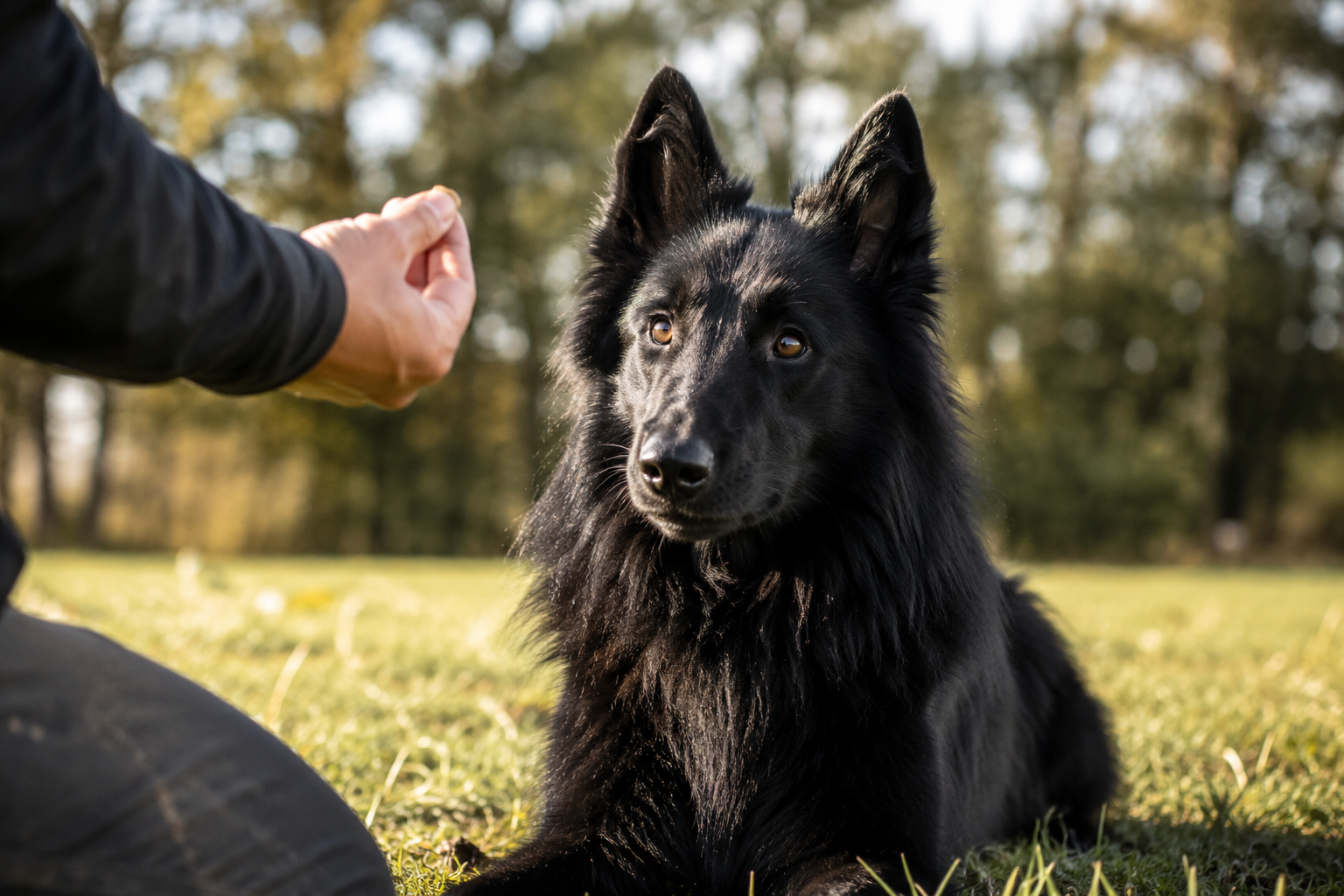
Belgian Sheepdogs are among the easier breeds to train in terms of raw capability, but they require an experienced, consistent handler. They are highly sensitive to tone and body language, which means harsh corrections can backfire quickly, creating anxiety rather than compliance. [5]
Positive, effective dog training methods — reward-based approaches using treats, praise, and play — work best with this breed. Early socialization is non-negotiable. Puppies exposed to a wide variety of people, sounds, and environments between 8 and 16 weeks develop into far more confident adults.
Basic Commands to prioritize early:
- Sit, stay, come, leave it (foundation obedience)
- Loose-leash walking (this breed has strong herding drive and will pull)
- Place or settle (teaches impulse control)
- Recall under distraction (critical for a high-energy working breed)
This is not a breed that does well with sporadic weekend training sessions. Daily 10-15 minute training blocks, combined with mental enrichment like puzzle feeders or nose work, keep a Belgian Sheepdog sharp and content.
Why Is My Belgian Sheepdog So Anxious and How Do I Help?
Anxiety is one of the most common behavioral concerns reported by Belgian Sheepdog owners, and it usually stems from under-stimulation, insufficient socialization, or a genetic predisposition toward sensitivity. This breed bonds intensely with its family and can develop separation anxiety when left alone for extended periods. [5]
Signs of anxiety in Belgian Sheepdogs:
- Excessive barking or whining when alone
- Destructive chewing or pacing
- Shadowing the owner from room to room
- Reactivity toward strangers or other dogs
How to help:
- Build alone-time tolerance gradually, starting with short absences and extending them slowly.
- Provide a structured daily routine — predictability reduces stress in sensitive dogs.
- Use positive reinforcement to build confidence in new situations rather than forcing exposure.
- Consult a certified veterinary behaviorist if anxiety is severe or worsening.
A Belgian Sheepdog named Dibs, owned by Linda Brady, demonstrated the breed’s emotional intelligence in a powerful way by providing therapeutic support to the community following the Oxford High School shooting in Michigan. [2] That same sensitivity that makes them exceptional therapy dogs can also make them vulnerable to anxiety when their needs are not met.
Are Belgian Sheepdogs Good for Families With Small Kids?
Belgian Sheepdogs can be wonderful family dogs, but they are better suited to families with older children than households with toddlers. Their strong herding instinct can lead them to nip at or circle small, fast-moving children, which is a natural working behavior that requires careful management and training. [5]
With proper socialization and supervision, a well-raised Belgian Sheepdog is loyal, protective, and deeply affectionate with its family. They tend to form strong bonds with all household members rather than attaching to just one person.
Best fit: Families with children aged 8 and older who understand how to interact respectfully with dogs. Always supervise interactions between any dog and young children, regardless of breed.
Common Health Problems in Belgian Sheepdogs
Belgian Sheepdogs are generally healthy, but like most purebred dogs, they carry breed-specific health risks that every owner should know about. The most commonly reported conditions include hip dysplasia, elbow dysplasia, progressive retinal atrophy, epilepsy, and a known sensitivity to anesthesia. [6]
Preventive care checklist:
- Annual hip and elbow evaluations, especially after age 2
- Regular eye exams to screen for progressive retinal atrophy
- Dental cleanings and at-home brushing to prevent periodontal disease
- Inform your veterinarian of the breed’s anesthesia sensitivity before any surgical procedure
- Keep vaccinations and parasite prevention current
If your senior dog develops joint stiffness or mobility issues, our resource on when to euthanize a dog with arthritis offers compassionate guidance for navigating that difficult decision.
How Much Exercise Does a Belgian Sheepdog Really Need Daily?
A Belgian Sheepdog needs a minimum of 60-90 minutes of vigorous physical exercise every day, and that is a floor, not a ceiling. This is not a breed that will be satisfied with a short walk around the block. [4]
Ideal exercise options:
- Off-leash running in a securely fenced area
- Agility, flyball, or herding trials
- Hiking or trail running with their owner
- Fetch sessions combined with obedience work
Mental exercise matters just as much as physical activity. A tired body paired with an understimulated mind still produces a restless, difficult dog. Puzzle toys, scent work, and training sessions fill that gap effectively.
Can Belgian Sheepdogs Live in Apartments or Do They Need a Big Yard?
Apartment living is technically possible for a Belgian Sheepdog, but only if the owner is genuinely committed to providing 60-90 minutes of outdoor exercise daily without exception. A big yard helps but does not replace structured activity — a dog left alone in a yard will not exercise itself meaningfully.
Apartment living works if:
- You live near parks, trails, or open spaces
- You work from home or have a flexible schedule
- You can commit to multiple daily outings
A yard is strongly preferred if:
- You have a high-energy working line dog
- You plan to do agility or herding work at home
- You have children who play actively with the dog outdoors
Do Belgian Sheepdogs Shed a Lot and How Often Should I Groom Them?
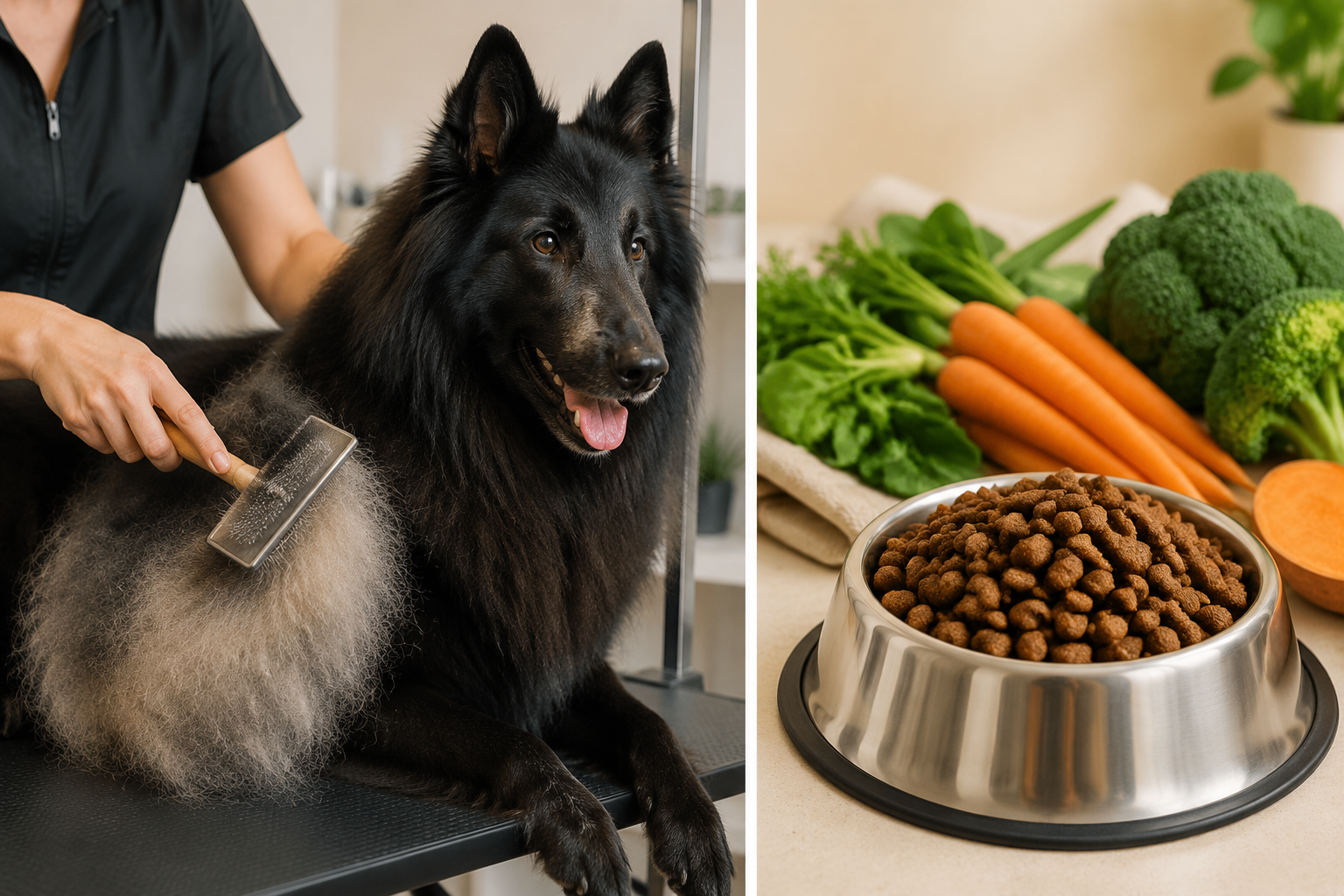
Yes, Belgian Sheepdogs shed consistently throughout the year and heavily during seasonal coat blows in spring and fall. Their long, dense double coat requires brushing 2-3 times per week under normal conditions and daily brushing during heavy shedding periods. [6]
Grooming routine:
- Brushing: 2-3 times weekly with a slicker brush and metal comb
- Bathing: Every 6-8 weeks, or when dirty
- Nail trimming: Every 3-4 weeks
- Ear cleaning: Weekly checks to prevent moisture buildup
- Coat trimming: Light trimming around the paws and ears as needed; no full clipping required
The coat is naturally dirt-resistant and does not mat as severely as some other long-coated breeds, but consistent grooming prevents tangles from forming at the neck and behind the ears.
What Kind of Diet Should I Feed My Belgian Sheepdog?
A Belgian Sheepdog does best on a high-quality diet formulated for medium to large active breeds, with protein as the first ingredient. The exact amount depends on age, weight, and activity level, so always follow the feeding guidelines on your chosen food and adjust based on body condition. [6]
Feeding guidelines by life stage:
- Puppies (under 12 months): Large-breed puppy formula to support controlled bone growth
- Adults (1-7 years): Active adult formula, 2.5-3.5 cups daily split into two meals (estimate for a 65-pound dog)
- Senior dogs (7+ years): Senior formula with joint support ingredients like glucosamine
For broader nutrition guidance, our dog nutrition resource hub covers feeding fundamentals for all life stages.
Common mistake: Overfeeding this breed because of its high activity level. Belgian Sheepdogs can gain weight if exercise decreases during injury or illness, which puts added stress on joints already susceptible to dysplasia.
Best Alternative Herding Dog Breeds to the Belgian Sheepdog
If the Belgian Sheepdog’s intensity or grooming demands feel like too much, several other herding breeds offer similar intelligence and loyalty with different trade-offs.
- Australian Cattle Dog: Shorter coat, equally driven, slightly more independent. See our Australian Cattle Dog guide for details.
- Belgian Malinois: Shorter coat, higher drive, more commonly used in working roles. Better for experienced handlers only.
- Belgian Tervuren: Similar to the Groenendael but with a fawn and black coat. Nearly identical temperament.
- Bergamasco Sheepdog: A unique Italian herding breed with a distinctive corded coat and calmer disposition. Learn more in our Bergamasco Sheepdog profile.
Signs Your Belgian Sheepdog Might Not Be Right for Your Lifestyle
This breed is genuinely not the right fit for everyone, and recognizing that early saves both the owner and the dog significant stress.
Consider a different breed if:
- You work long hours away from home with no dog walker or daycare arrangement
- You prefer a calm, low-energy companion
- You have very young children and no prior experience managing herding instincts
- You live in a small space and cannot commit to daily vigorous exercise
- You are not prepared for consistent, ongoing training throughout the dog’s life
- Heavy shedding is a dealbreaker for your household
A Belgian Sheepdog that is under-exercised, under-stimulated, or left alone too often will develop destructive behaviors, excessive barking, and anxiety. These are not character flaws — they are predictable outcomes of a mismatch between breed needs and owner lifestyle.
Frequently Asked Questions About the Belgian Sheepdog
Q: Is the Belgian Sheepdog the same as the Belgian Malinois?
No. Both are Belgian herding breeds, but the Belgian Sheepdog (Groenendael) has a long black coat, while the Malinois has a short fawn coat with a black mask. They share similar working drive but are distinct breeds.
Q: How popular is the Belgian Sheepdog in 2026?
The AKC ranks the Belgian Sheepdog at #173 in popularity as of 2026, making it a relatively uncommon breed compared to the Belgian Malinois. [8]
Q: Do Belgian Sheepdogs bark a lot?
They are vocal dogs that will alert to strangers and unusual sounds. Without proper training, excessive barking can become a problem. Early training to establish a “quiet” command helps significantly.
Q: Are Belgian Sheepdogs good with other dogs?
Generally yes, especially when socialized early. They can show herding behavior toward other dogs, which some dogs find annoying. Proper introductions and supervision are recommended.
Q: How long do Belgian Sheepdogs live?
The breed has a life expectancy of 12-14 years with good preventive care and a healthy diet. [4]
Q: Can Belgian Sheepdogs work as therapy dogs?
Absolutely. Their sensitivity and emotional attunement make them highly effective therapy dogs. Dibs, a Belgian Sheepdog, provided community support following a school tragedy in Michigan, demonstrating the breed’s compassionate nature. [2]
Q: Do Belgian Sheepdogs do well in cold weather?
Yes. Their dense double coat provides strong insulation in cold climates. They are less tolerant of extreme heat and should have shade and water access during hot weather.
Q: What is the Belgian Sheepdog’s AKC group?
The Belgian Sheepdog is classified in the AKC Herding Group. [4]
Q: Are Belgian Sheepdogs good for first-time dog owners?
Generally not recommended for first-time dog owners without professional training support. Their sensitivity and high drive require experienced, consistent handling.
Q: Is the Belgian Sheepdog competing internationally in 2026?
Yes. The Belgian Sheepdog Society has named its national team for the Continental Sheepdog Championship 2026, scheduled August 27-30 in Lommel, Belgium, including Kevin Willems with Clio, the Belgian Champion of 2026. [3]
Conclusion
The Belgian Sheepdog is a breathtaking, deeply intelligent canine companion that rewards the right owner with unmatched loyalty, versatility, and affection. Whether you are drawn to the breed’s striking black coat, its proven working ability, or its emotional sensitivity, understanding what this furry friend truly needs is the foundation of a successful partnership.
Actionable next steps:
- Honestly assess your daily schedule and activity level against the breed’s 60-90 minute exercise requirement.
- Connect with the Belgian Sheepdog Society or AKC breed club to find reputable breeders who health-test their dogs.
- Enroll in a breed-specific training class before your puppy even comes home.
- Set up a consistent grooming routine from day one to make brushing a positive experience.
- Schedule a wellness exam within the first week of bringing your dog home and discuss the breed’s anesthesia sensitivity with your vet.
If you are still exploring your options, our comprehensive profiles of the Belgian Tervuren and Belgian Laekenois offer helpful comparisons across the full Belgian herding family.
References
[1] Soleil A Belgian Sheepdog Takes Best In Show At The National Dog Show – https://www.vpm.org/npr-news/npr-news/2025-11-27/soleil-a-belgian-sheepdog-takes-best-in-show-at-the-national-dog-show
[2] Belgian Sheepdog Therapy Dog Oxford High School Shooting – https://www.akc.org/expert-advice/news/belgian-sheepdog-therapy-dog-oxford-high-school-shooting/
[3] Belgian Sheep Dog Society – https://www.belgian-sheep-dog-society.be/
[4] Belgian Sheepdog – American Kennel Club – https://www.akc.org/dog-breeds/belgian-sheepdog/
[5] Belgian Sheepdog Right For You – American Kennel Club – https://www.akc.org/expert-advice/dog-breeds/belgian-sheepdog-right-for-you/
[6] Belgian Sheepdog – PetMD – https://www.petmd.com/dog/breeds/belgian-sheepdog
[7] Belgian Sheepdog – Britannica – https://www.britannica.com/animal/Belgian-sheepdog
[8] Belgian Sheepdog – Breeds101 – https://breeds101.com/breeds/belgian-sheepdog/