
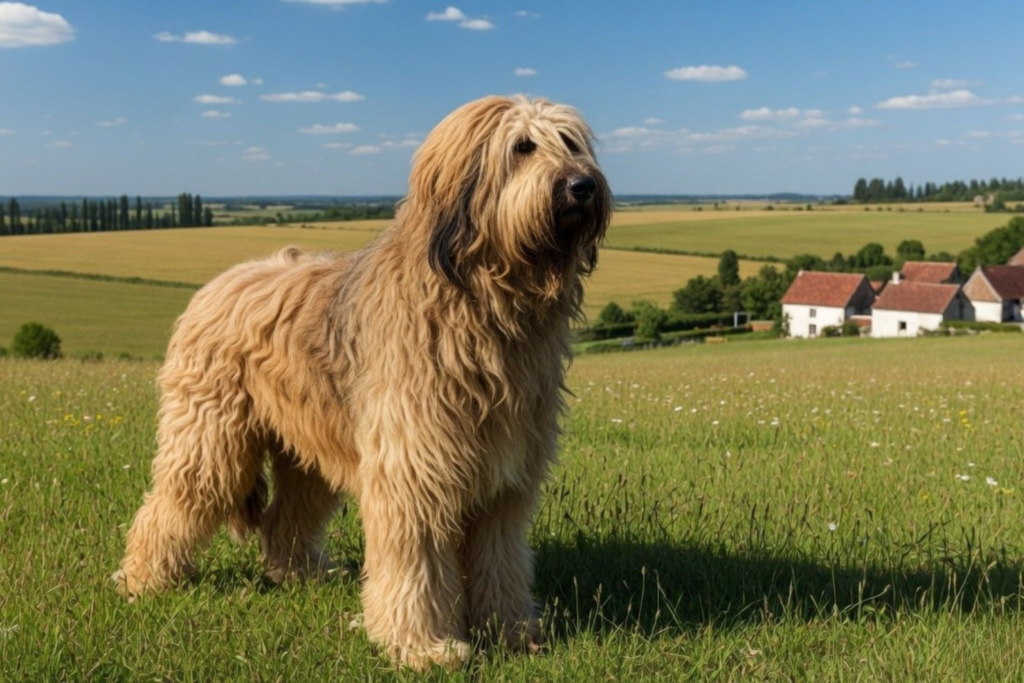
The Briard is a large, muscular French herding dog known for its loyal, protective nature and distinctive long, shaggy coat. Originally bred to herd and guard sheep in the Brie region of France, this intelligent breed makes an excellent companion for active families and experienced dog owners who can provide structured training and plenty of exercise.
Key Takeaways
- The Briard is an ancient French herding breed from the Brie region, often called the “Chien Berger de Brie.”
- Males typically stand 23-27 inches tall and weigh 55-100 pounds, while females are slightly smaller.
- They have a life expectancy of 10-12 years and require regular preventive care.
- Briards have substantial grooming needs due to their long double coat, which requires frequent brushing.
- They are loyal, protective, and intelligent, needing early socialization and consistent, positive training.
What is a Briard dog breed?
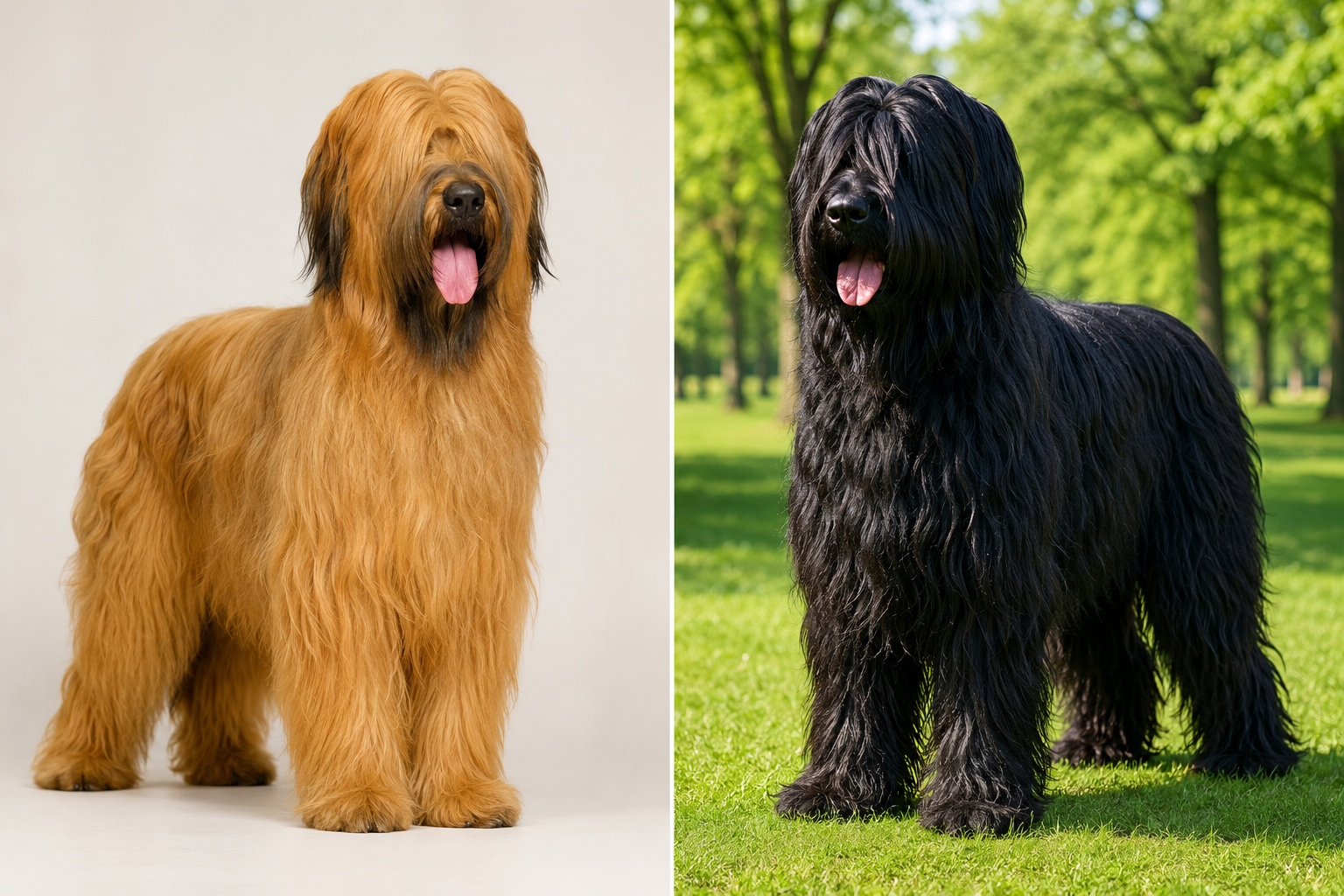
The Briard is a large, ancient French herding dog breed characterized by its shaggy double coat and strong guarding instincts. Known as the “Chien Berger de Brie” or briard berger, this breed has been used for centuries to herd and protect flocks in the French countryside.
The Briard is recognized by major organizations like the American Kennel Club (AKC) and the royal kennel club (rkc). According to the AKC, the Briard is a large, muscular dog in the Herding Group, known for loyalty and spirit, often described as “a heart wrapped in fur” [2]. The breed is also recognized by the Fédération Cynologique Internationale (ration cynologique internationale) and is part of the union europ enne (europ enne berger, enne berger brie) standards [1].
Breed Characteristics:
- Origin: France (Brie region)
- Group: Herding
- Size: Large
- Coat: Long, double coat
- Temperament: Loyal, protective, intelligent
History and Characteristics of the Briard
The Briard boasts a rich history dating back to at least the eighth century in France, where it served as a versatile farm dog. As a member of The Pastoral breed group, the breed exhibits strong herding characteristics, high intelligence, and a distinctive long coat.
Historical records and legends reference the Briard as early as the 12th and 14th centuries [4]. The breed was exhibited at France’s first dog show in 1863 and gained official recognition in 1897 [4]. Briards were used by the French army in both World Wars as pack dogs, messengers, and sentries, and they still participate in search-and-rescue and police work today [4][8].
About this breed: The Briard is one of the oldest French herding breeds, documented in French records and depicted in medieval tapestries [9]. The breed standard outlines specific conformation, including a strong, muscular build and a characteristic head with a beard and mustache. You can view Images for this breed in various archives, including archive org, to see their historical depictions [1].
Briard Temperament and Personality Traits
Briards are known for their loyal, protective, and affectionate temperament, often described as “a heart wrapped in fur.” They are highly intelligent and sensitive dogs that form strong bonds with their families but can be wary of strangers without proper socialization.
Expert commentary emphasizes the Briard’s temperament as loyal, protective, intelligent, and affectionate [3]. They are suitable for experienced owners who can provide structured training and socialization. Their strong bonding ability and relatively modest prey drive compared with some other herding breeds make them versatile companions [8]. Many Briards thrive when given a job to do, whether it is herding, guarding, or participating in dog sports.
Personality Highlights:
- Loyal: Devoted to their family.
- Protective: Natural guardians of their home.
- Intelligent: Quick learners but independent thinkers.
- Sensitive: Respond best to positive reinforcement.
Are Briards Good Family Dogs?
Yes, Briards can make excellent family dogs for active households with older children, provided they receive proper training and early socialization. Their protective nature makes them devoted to their families, though their large size requires supervision around very young kids.
The first Briard registered in a household often changes the dynamic, bringing energy and loyalty. Briards are known to be good with children when raised with them, but their herding instincts might lead them to nip at heels during play [6]. It is essential to teach children how to interact respectfully with the dog and to supervise all interactions. If you want to find out about how Briards interact with kids, consult breed-specific resources [10].
Briard vs German Shepherd Differences
While both are intelligent herding breeds, the Briard is larger and has a long, shaggy coat compared to the German Shepherd’s medium-length double coat. Briards are generally more independent and protective, whereas German Shepherds are highly trainable and often used in police work.
Both breeds are loyal and intelligent, but the Briard’s coat requires more maintenance. The German Shepherd is more popular and widely recognized, while the Briard remains relatively rare [5]. If you are deciding between the two, choose the Briard if you want a unique, shaggy herding dog with strong guarding instincts, and choose the German Shepherd if you prefer a highly versatile, easily trainable working dog. You can explore right arrow to learn right arrow more about other breeds like the German Shepherd.
Briard vs Poodle Mix Comparison
A Briard-Poodle mix (often called a Briardoodle) combines the Briard’s herding instincts with the Poodle’s intelligence and low-shedding coat. This mix tends to be highly trainable, affectionate, and may have a wavy or curly coat that requires regular grooming.
The breeds Briard and Poodle both come in various sizes, but the Briard is consistently large. The Poodle mix may inherit the Briard’s protective nature and the Poodle’s eagerness to please. When considering a mix, it is important to research both parent breeds to understand potential health and temperament traits. You can learn right arrow about other mixes like the Poodle or similar breeds.
Briard Grooming Requirements and Maintenance
Briards have substantial grooming needs due to their long, double coats, requiring brushing several times a week to prevent matting. Owners must also regularly check their ears and trim their nails to maintain overall health.
The Briard’s coat is coarse, dry, and long, forming a natural curtain over their eyes [8]. Grooming a Briard is a commitment; you will need to shop for quality brushes and grooming tools.
Colour Watch and Breed Standard colours:
- Breed Standard colours: Tawny (fauve), black, and grey are accepted.
- Other colour/s: Some variations may exist but are less common.
- Non-breed-standard colours: Colors outside the standard should be avoided for show dogs.
You can shop for grooming supplies from brands like Orvis, which offers quality dog care products. Remember to check their ears regularly, as the long hair can trap moisture and lead to infections.
Why is My Briard Shedding So Much?
Briards shed moderately year-round, but excessive shedding can indicate stress, poor diet, or underlying health issues. Regular brushing helps manage loose hair and keeps the coat healthy.
While Briards are not considered heavy shedders compared to some breeds, their long hair can still accumulate quickly. If you notice excessive shedding, evaluate your dog’s diet and stress levels. Ensuring they receive the right nutrients can amp up their coat health. You can find out more about dog health and shedding through veterinary resources [8].
Best Dog Food for Briards
The best dog food for Briards is a high-quality, protein-rich formula designed for large, active breeds to support their muscle mass and energy levels. Look for foods with added joint support like glucosamine.
Feeding your Briard a balanced diet is crucial for their long-term health. You should shop for dog food that lists real meat as the first ingredient and avoids fillers. Consult your veterinarian to determine the appropriate portion size based on your dog’s age, weight, and activity level. You can also explore right arrow our guide on dog nutrition for more tips.
Briard Exercise Needs and Activity Level

Briards are active herding dogs that require at least 1 to 2 hours of daily exercise to stay physically and mentally healthy. Activities like long walks, hiking, and dog sports are ideal for burning off their energy.
Without adequate exercise, Briards can become bored and destructive. They enjoy activities that challenge them both physically and mentally. You can take your Briard on outdoor adventures; just make sure you have the right gear, like packs amp bags for long hikes, and pants amp shorts for active weather. Some owners even enjoy taking their dogs along while they fly fish, though Briards are not typically used to retrieve fly fishing rods. You can view our guide on benefits of traveling with your dog for more ideas.
Briard Training Tips for Beginners
Training a Briard requires consistency, patience, and positive reinforcement, as they are intelligent but can be independent thinkers. Early socialization and puppy training classes are essential for this strong-willed breed.
Effective dog training steps:
- Start early: Begin training and socialization as soon as you bring your puppy home.
- Use positive reinforcement: Reward good behavior with treats and praise.
- Be consistent: Establish clear rules and stick to them.
- Socialize: Expose your Briard to different people, animals, and environments.
The Briard Club of America (BCOA) offers resources for training and socialization [10]. Remember that nbsp nbsp nbsp (non-breaking spaces) in training schedules can help maintain consistency. You can also use a ref ref name to track training progress. For beginners, it is often helpful to work with a professional trainer who understands herding breeds.
Do Briards Get Along With Other Pets?
Briards can get along well with other pets if they are raised together and properly socialized from a young age. Their herding instincts may cause them to chase smaller animals, so supervision is necessary.
The Briard other pets dynamic depends largely on early exposure. If a Briard is introduced to cats or other dogs as a puppy, they usually accept them as part of their flock. However, their natural guarding instinct might lead them to be protective of their family from unfamiliar animals. You can find out about introducing new pets by consulting a professional trainer.
Briard Health Problems and Lifespan
Briards have a lifespan of 10-12 years and are generally healthy, but they are prone to certain conditions like hip dysplasia, eye issues, and congenital diseases. Regular veterinary check-ups and preventive care are crucial.
Breed watch and Breeding restrictions:
- Hip Dysplasia: A common issue in large breeds; ensure breeders screen for this.
- Eye Problems: Including night blindness and other congenital eye conditions.
- Bloat: Gastric torsion can be a risk; feed smaller, frequent meals.
Reputable breeders will test their breeding stock for these conditions to avoid passing them on. The Beauceron, a related French breed, shares some of these health concerns. You can view our guide on dog health for more information on preventive care.
How Much Does a Briard Cost?
A Briard puppy from a reputable breeder typically costs between $1,000 and $2,500, depending on pedigree and location. Additional costs include grooming, food, and veterinary care.
When you search for a Briard, remember that the initial purchase price is only the beginning. You will need to shop for supplies, pay for training, and budget for annual vet visits. The investment is worth it for a healthy, well-bred dog. You can find out about the costs of owning a dog in our guide on why are dogs so expensive.
Where to Buy a Briard Puppy
To find a healthy Briard puppy, use the Find a Puppy service from recognized kennel clubs or contact the Briard Club of America for reputable breeders. Always ask for health clearances and visit the breeder’s facility.
Looking for a puppy? More information:
- Need to find out more about a breed? Use our Find a Puppy service or contact the rkc.
- Get the best lifetime pet insurance: Consider insurance to cover unexpected health issues.
- Find a reputable breeder: The BCOA is a great starting point [10].
You can also search for rescue organizations if you prefer to adopt an adult Briard. Make sure to find out about the dog’s history and temperament before bringing them home.
Frequently Asked Questions
Is a Briard a good family dog?
Yes, a Briard can be an excellent family dog for active households. They are loyal, protective, and affectionate with their families. However, due to their large size and herding instincts, they require early socialization, consistent training, and supervision around young children to ensure safe and positive interactions.
What is the least wanted dog?
The least wanted dog breeds often vary by region and year, but typically include breeds with high energy levels, extensive grooming needs, or strong independent streaks that require experienced handling. Some surveys suggest breeds like the English Foxhound or Cesky Terrier are among the least popular due to their specialized needs.
Are Briard dogs aggressive?
Briard dogs are not inherently aggressive, but they are protective and can be wary of strangers. This guarding instinct means they need early and consistent socialization to prevent defensive aggression. With proper training and positive reinforcement, Briards are well-mannered and devoted companions.
What is the meaning of Briard?
The meaning of Briard refers to a French herding dog breed originating from the Brie region of France. The name “Briard” literally translates to “dog of Brie” or “Chien Berger de Brie,” reflecting its historical role as a shepherd’s dog in that specific area of France.
Conclusion
The Briard is a majestic, loyal, and intelligent French herding dog that thrives in an active, loving home. With their distinctive shaggy coats and protective nature, they make excellent companions for experienced dog owners willing to invest time in training, grooming, and exercise. If you are ready to welcome a Briard into your life, start by researching reputable breeders or rescue organizations and preparing your home for this energetic breed. Take the next step by exploring our comprehensive breed guides and training resources to ensure a happy, healthy life for your new furry friend.
References
[1] Briard – https://en.wikipedia.org/wiki/Briard
[2] Briard – https://www.akc.org/dog-breeds/briard/
[3] Dog Breed Profile Briard Ndash The Loyal Intelligent And Majestic French Shepherd – https://mywoof.com/blogs/articles/dog-breed-profile-briard-ndash-the-loyal-intelligent-and-majestic-french-shepherd
[4] Briard – https://www.royalkennelclub.com/search/breeds-a-to-z/breeds/pastoral/briard/
[5] Briard – https://pickyourpooch.com/briard.htm
[6] Briard – https://www.dogster.com/dog-breeds/briard
[7] Briard – https://simple.wikipedia.org/wiki/Briard
[8] Briard – https://www.omlet.us/breeds/dogs/briard/
[9] Briard – https://www.ckc.ca/en/Choosing-a-Dog/Choosing-a-Breed/Herding-Dogs/Briard
[10] General 4 – https://www.briardclubofamerica.org/general-4