
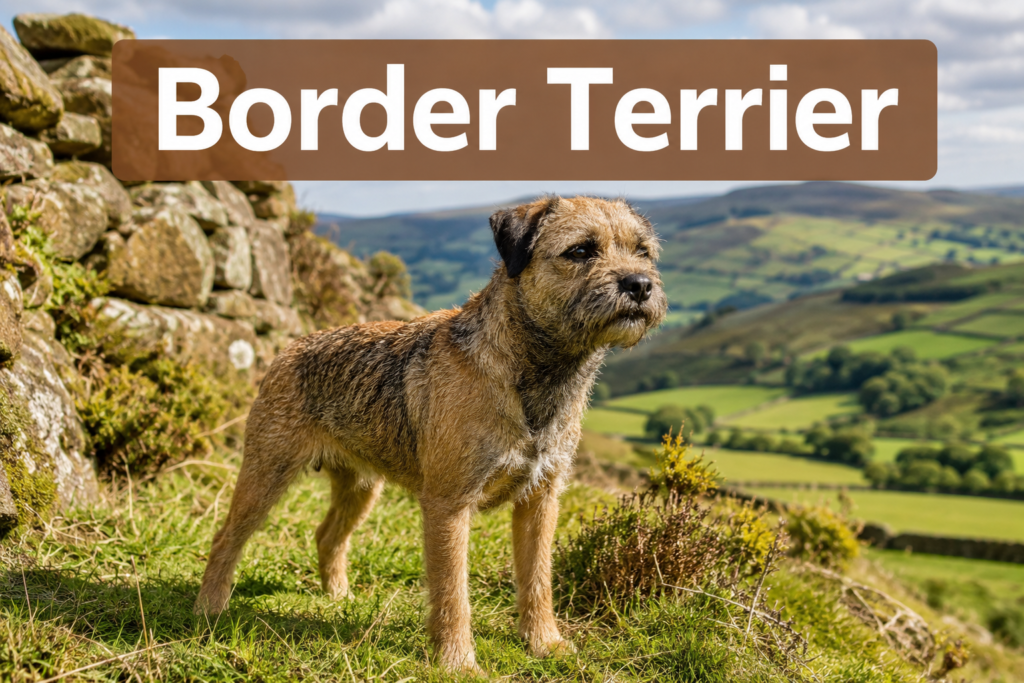
Quick Answer: The Border Terrier is a small, hardy working dog originally bred along the England-Scotland border to hunt foxes and vermin. Known for a wiry double coat, affectionate personality, and high energy, this breed suits active families and adapts well to various living environments when given enough daily exercise and mental stimulation. [1]
Key Takeaways
- Border Terriers weigh 11.5 to 15.5 pounds and stand 12 to 15 inches tall, making them compact but sturdy
- Life expectancy is 12 to 15 years, which is above average for small dogs [1]
- They are affectionate, trainable, and good with children, but their strong prey drive requires secure fencing [2]
- The wiry double coat needs weekly brushing and professional hand-stripping two to three times per year [3]
- Common health concerns include gallbladder mucocele and Cushing’s disease; regular vet check-ups are essential [3]
- Border Terriers can live in apartments if exercised adequately, but thrive with access to a yard [6]
- Puppy prices typically range from $800 to $1,800 USD from reputable breeders
- Early socialization and positive reinforcement training produce the best results [5]
What Is a Border Terrier?
The Border Terrier is a small working terrier developed in the Cheviot Hills region along the England-Scotland border, primarily during the 18th and 19th centuries. Farmers and hunters bred them to be tough enough to follow horses over rough terrain and small enough to bolt foxes from their dens. [1]
Physical characteristics at a glance:
| Feature | Detail |
|---|---|
| Height (male) | 12-15 inches |
| Weight (male) | 13-15.5 lbs |
| Weight (female) | 11.5-14 lbs |
| Coat type | Wiry, dense double coat |
| Coat colors | Grizzle and tan, blue and tan, red, wheaten |
| Lifespan | 12-15 years |
The breed’s distinctive otter-shaped head, V-shaped drop ears, and alert dark eyes make it easy to identify. Despite their small size, Border Terriers are built for endurance, not just looks. [1]
Border Terrier Temperament and Personality
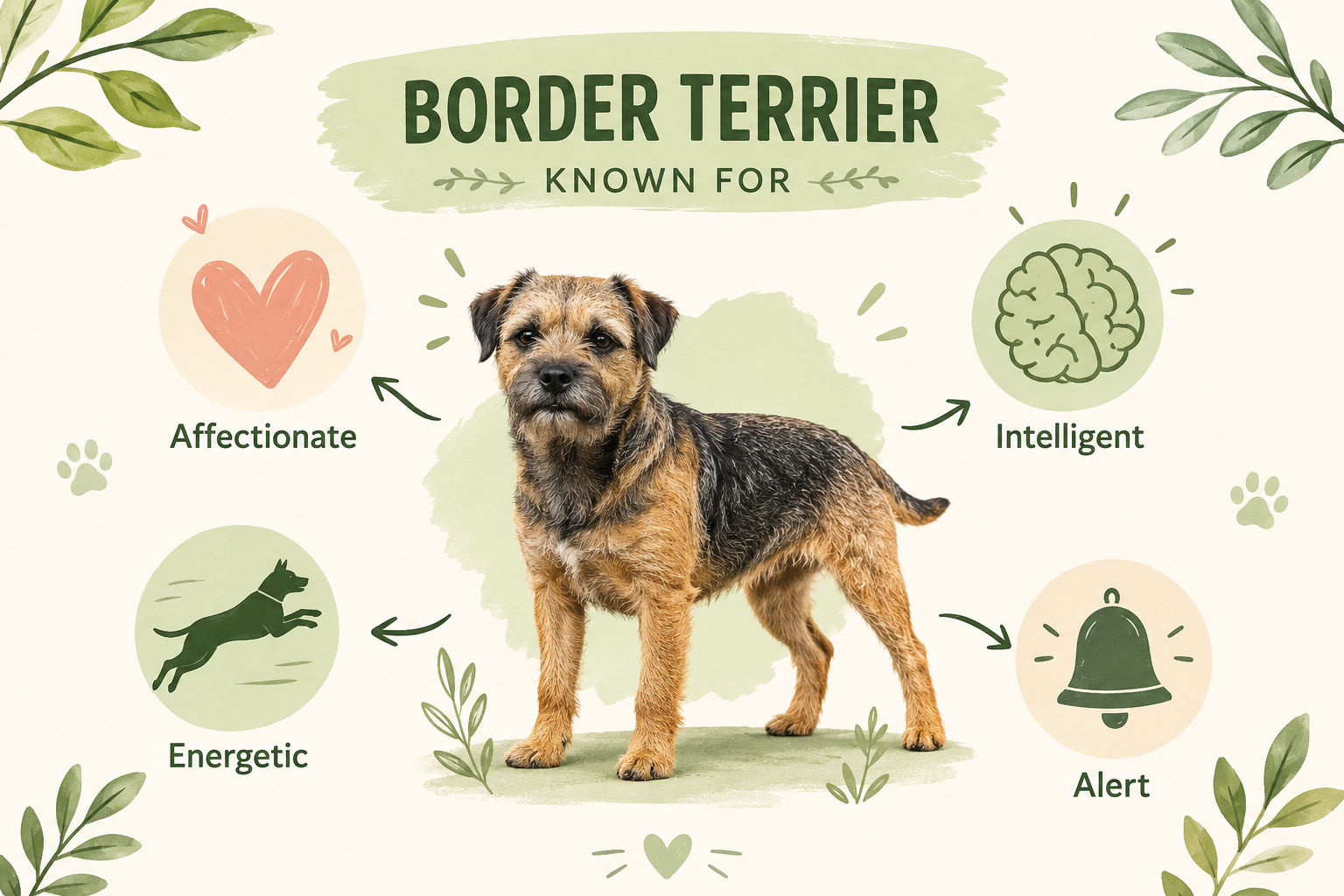
Border Terriers are affectionate, obedient, and easily trained, making them one of the more adaptable terrier breeds for family life. They bond closely with their owners and tend to be good-natured rather than snappy or aggressive. [2]
Key personality traits include:
- Affectionate: They love close contact and are happy to curl up on the sofa after a long walk
- Alert: Their working heritage keeps them watchful and curious
- Tenacious: Like most terriers, they can be stubborn when something captures their attention
- Social: They generally get along with other dogs, especially when socialized early
- Prey-driven: Small animals like rabbits, squirrels, and cats may trigger a chase instinct [2]
British tennis player Sir Andy Murray and television presenter Lorraine Kelly have both spoken publicly about their fondness for the breed, often citing the combination of energy and affection as the main appeal. [4]
Are Border Terriers Good for Families With Kids?
Yes, Border Terriers are generally excellent family dogs. They are patient, playful, and sturdy enough to handle the rough-and-tumble play of children. [5]
That said, a few conditions apply:
- Young children should be taught to respect the dog’s space, as any dog can react poorly to rough handling
- The breed’s high energy means they match well with active families rather than very sedentary households
- Supervision is still recommended around toddlers, as with any breed
For families exploring small dog options, the best small dogs for kids guide covers several comparable breeds worth considering alongside the Border Terrier.
Border Terrier vs Other Terrier Breeds
Border Terrier vs Jack Russell Terrier
Both breeds are energetic, intelligent, and have strong prey drives. The key differences come down to temperament and trainability.
- Border Terriers are generally calmer indoors, more biddable, and less prone to aggression toward other dogs
- Jack Russell Terriers tend to be more intense, louder, and can be harder to manage for first-time owners
- Border Terriers are slightly larger and heavier on average
- Both require secure fencing and regular exercise
Choose a Border Terrier if you want a terrier that’s easier to train and more adaptable to family life. Choose a Jack Russell if you want a higher-octane working dog and have terrier experience.
Other terrier comparisons worth exploring include the Welsh Terrier, Bedlington Terrier, and Airedale Terrier, all of which share British working dog roots.
Border Terrier Price and Cost
A Border Terrier puppy from a reputable breeder typically costs between $800 and $1,800 USD. Show-quality or champion-line dogs can exceed $2,000. Rescue adoption fees generally range from $150 to $400.
Ongoing annual costs to budget for:
- Food: $300 to $500 per year (quality dry kibble for a small active dog)
- Veterinary care: $400 to $700 per year for routine check-ups and vaccinations
- Grooming: $200 to $400 per year for professional hand-stripping sessions
- Pet insurance: $300 to $600 per year, depending on coverage
For a broader look at what dog ownership costs, the most affordable dog breeds to own and maintain article provides useful comparisons.
How Much Do Border Terriers Shed?
Border Terriers are considered low to moderate shedders. Their wiry outer coat does not shed heavily like a Labrador’s, but they do lose some hair, particularly during seasonal coat changes. [3]
They are not classified as hypoallergenic. If allergies are a concern, check the best hypoallergenic dogs for apartments guide for alternative options.
Border Terrier Grooming Requirements
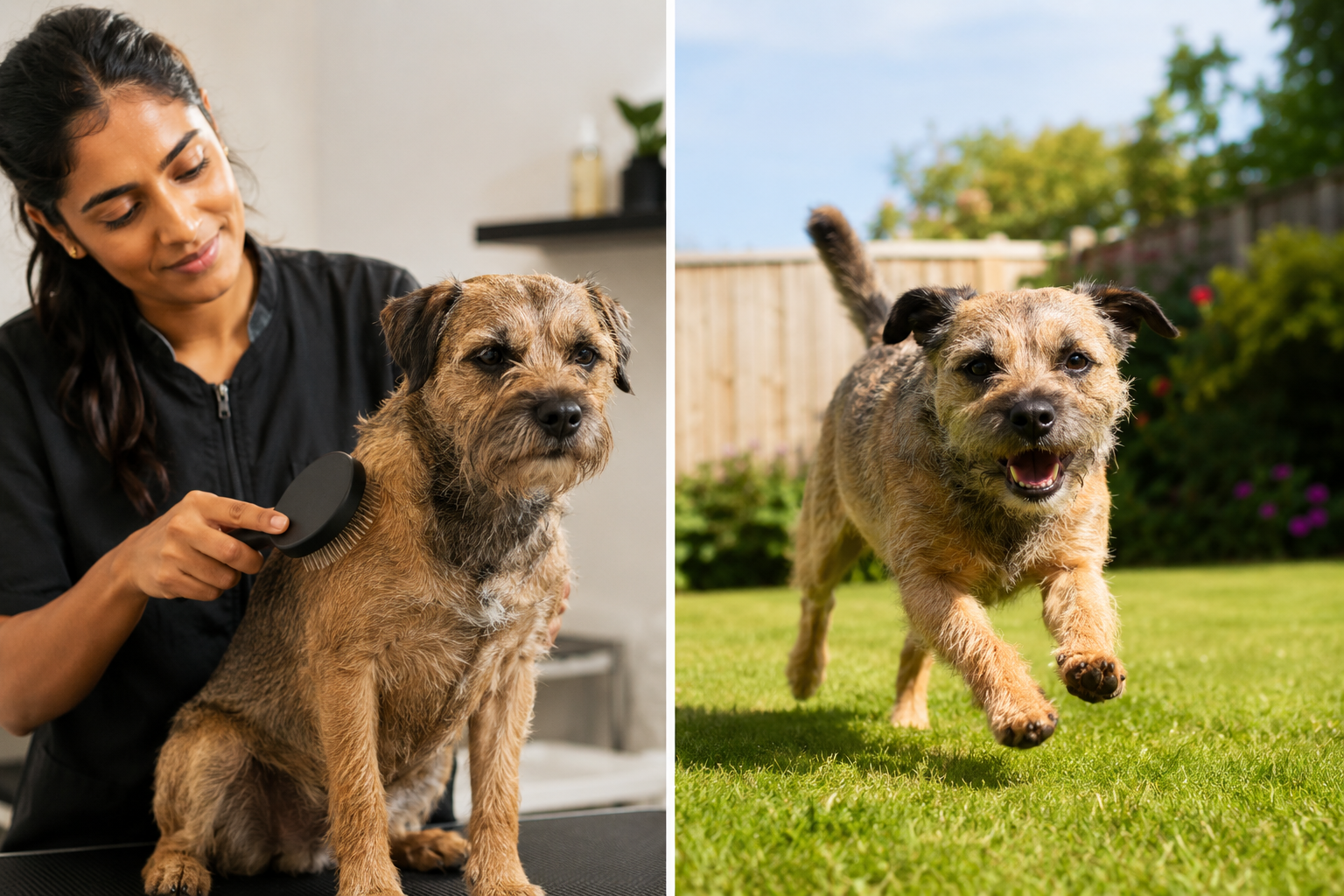
The Border Terrier’s wiry double coat requires specific maintenance to stay healthy and functional. Weekly brushing removes loose hair and prevents matting. Two to three times per year, the coat should be hand-stripped, a process that removes dead outer coat by hand rather than clipping. [3]
Why hand-stripping matters: Clipping softens the coat texture over time and can dull the natural color. Hand-stripping preserves the hard, weather-resistant quality the coat was bred for.
Basic grooming checklist:
- Brush weekly with a slicker or pin brush
- Hand-strip the coat two to three times per year (or hire a professional groomer experienced with terriers)
- Trim nails every three to four weeks
- Clean ears weekly to prevent buildup
- Brush teeth several times per week
Border Terrier Health Problems and Issues
Border Terriers are generally a healthy breed with a life expectancy of 12 to 15 years. However, they are predisposed to certain conditions that owners should monitor. [3]
Common health concerns:
- Gallbladder mucocele: An accumulation of mucus in the gallbladder that can require surgical intervention
- Cushing’s disease (hyperadrenocorticism): A hormonal disorder more common in middle-aged to older dogs
- Hip dysplasia: Less common than in larger breeds but still worth screening for
- Juvenile epilepsy: Some lines carry a genetic predisposition
- Heart defects: Occasional reports of congenital issues in the breed
Regular annual veterinary check-ups and a reputable breeder who screens for genetic conditions significantly reduce risk. [3]
Border Terrier Exercise Needs and Activity Level
Border Terriers need at least one hour of vigorous exercise per day. This is a high-energy breed built for endurance, not just short bursts. [3]
Good exercise options include:
- Off-leash running in a securely fenced area
- Agility training (they excel at this)
- Long walks or hikes
- Fetch and interactive play sessions
- Scent games and puzzle feeders for mental stimulation
Common mistake: Underestimating their exercise needs because of their small size. A Border Terrier that doesn’t get enough activity will find its own entertainment, often through digging, barking, or chewing.
Border Terrier Training Tips and Tricks
Border Terriers respond best to positive reinforcement methods. They are intelligent and pick up commands quickly, but their terrier independence means they can lose interest if training sessions become repetitive or too long. [5]
Practical training tips:
- Keep sessions short: 10 to 15 minutes works better than 45-minute marathons
- Use high-value treats and praise as rewards
- Start recall training early and reinforce it consistently, given their prey drive
- Socialize with other dogs, people, and environments from puppyhood
- Enroll in a puppy class or basic obedience course for structured learning
For owners interested in how Border Terriers compare intellectually to other small breeds, the most intelligent small dog breeds guide is a useful reference.
Common Border Terrier Behavior Problems
The most frequent behavior issues in Border Terriers stem from under-stimulation or insufficient training, not aggression or anxiety.
- Digging: A deeply ingrained instinct from their vermin-hunting past
- Escaping: They are skilled diggers and climbers; fences need to be secure and extend underground
- Barking: They alert bark readily, which can become excessive without training
- Chasing: Small animals, cyclists, and joggers can trigger a chase response
- Separation anxiety: They bond closely with owners and can struggle when left alone for long periods
Most of these issues resolve with consistent exercise, training, and enrichment.
Where to Buy a Border Terrier Puppy
The safest route is through a breeder registered with a national kennel club, such as the American Kennel Club (AKC) or the Kennel Club (UK). Reputable breeders health-test their breeding dogs and will welcome questions about lineage and socialization. [1]
Options for finding a Border Terrier:
- AKC Marketplace or Kennel Club Find a Puppy tool: Both list registered breeders
- Border Terrier Club of America (BTCA): Maintains a breeder referral list
- Rescue organizations: Border Terrier-specific rescues exist in both the US and UK
- Local shelters: Less common but worth checking
Avoid pet stores and online listings that offer puppies without health guarantees, parental health records, or the ability to visit in person.
Frequently Asked Questions
Are Border Terriers easy to train?
Yes, Border Terriers are among the more trainable terrier breeds. They are intelligent and respond well to positive reinforcement, though short, varied sessions work better than long repetitive ones. [5]
Can Border Terriers live in apartments?
Yes, provided they receive at least one hour of vigorous exercise daily. They adapt well to smaller spaces as long as their energy needs are met. [6]
Do Border Terriers get along with cats?
It depends on early socialization. Border Terriers raised with cats from puppyhood usually coexist peacefully. Adult dogs with a strong prey drive may chase cats they haven’t grown up with. [2]
How long do Border Terriers live?
The average lifespan is 12 to 15 years, which is above average for small dogs. [1]
Are Border Terriers hypoallergenic?
No. While they shed less than many breeds, they are not considered hypoallergenic and produce dander that can affect allergy sufferers.
How often should a Border Terrier be groomed?
Weekly brushing at home, plus professional hand-stripping two to three times per year. [3]
What do Border Terriers eat?
A high-quality commercial dog food formulated for small, active breeds is appropriate. Portion size should match the dog’s age, weight, and activity level. Consult a veterinarian for specific feeding guidance. [5]
Are Border Terriers good for first-time dog owners?
Generally yes, especially compared to other terrier breeds. Their trainability and affectionate nature make them manageable, though their exercise needs and prey drive require commitment.
Do Border Terriers bark a lot?
They are alert barkers and will announce strangers or unusual sounds. With training, excessive barking can be managed effectively.
What is hand-stripping and does every Border Terrier need it?
Hand-stripping is the manual removal of dead outer coat to preserve texture and color. Show dogs require it; pet dogs can be clipped, though this softens the coat over time. [3]
Conclusion
The Border Terrier is a well-rounded small dog that offers a rare combination: genuinely affectionate and family-friendly, yet tough, energetic, and capable enough to satisfy owners who want more than a lapdog. Their 12 to 15 year lifespan, manageable size, and adaptability to various living situations make them a strong choice for active individuals and families alike.
Actionable next steps:
- Research Border Terrier-specific health tests and ask any prospective breeder for documentation of parental health screening
- Assess your daily schedule honestly: this breed needs at least one hour of exercise per day
- Contact the Border Terrier Club of America or the Kennel Club (UK) for verified breeder referrals
- If allergies are a concern in your household, consult an allergist before committing
- Begin budgeting for annual grooming, veterinary care, and quality nutrition from day one
For those still comparing breeds, the small dog breeds hub and the most intelligent small dog breeds guide are good starting points to confirm the Border Terrier is the right fit.
References
[1] Border Terrier – https://www.akc.org/dog-breeds/border-terrier/
[2] Meet Border Terrier – https://www.akc.org/expert-advice/lifestyle/meet-border-terrier/
[3] Border Terrier – https://www.petmd.com/dog/breeds/border-terrier
[4] Border Terriers The Dogs With Endless Energy That Still Love A Cuddle On The Sofa – https://www.countrylife.co.uk/out-and-about/dogs/border-terriers-the-dogs-with-endless-energy-that-still-love-a-cuddle-on-the-sofa-229987
[5] Border Terrier – https://www.dogster.com/dog-breeds/border-terrier/
[6] What To Know About Border Terriers – https://www.webmd.com/pets/dogs/what-to-know-about-border-terriers