
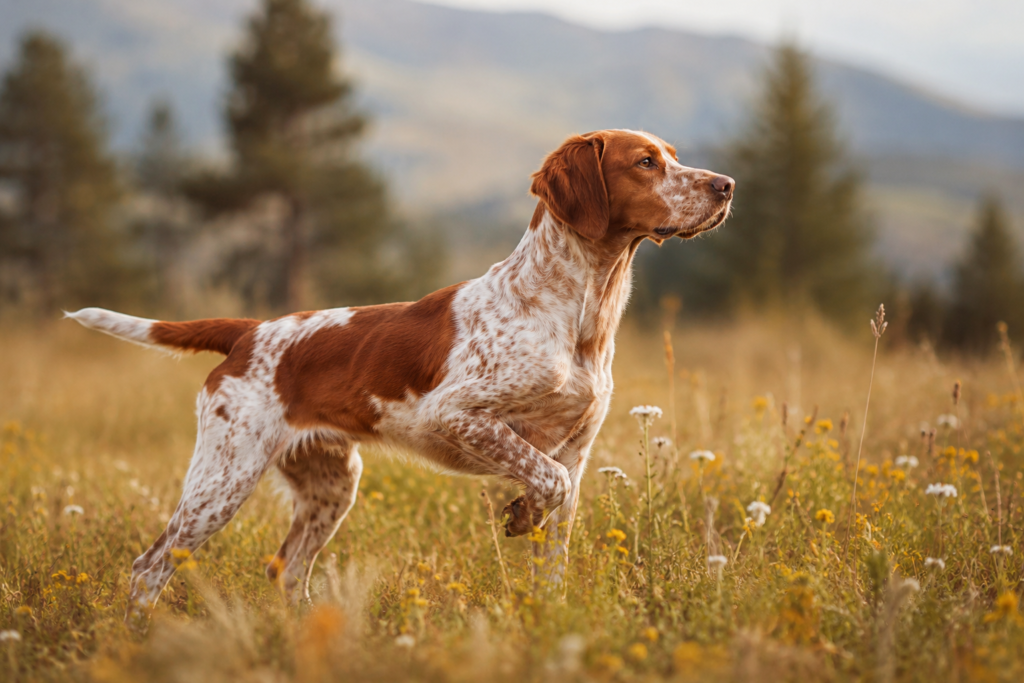
The Brittany dog is a medium-sized French pointing breed originally developed for bird hunting, known for its boundless energy, eager-to-please temperament, and distinctive orange-and-white or liver-and-white coat. Brittanys typically weigh 30-40 pounds, live about 11-13 years, and need substantial daily exercise, making them best suited for active families and outdoorsy owners rather than apartment dwellers with sedentary lifestyles.
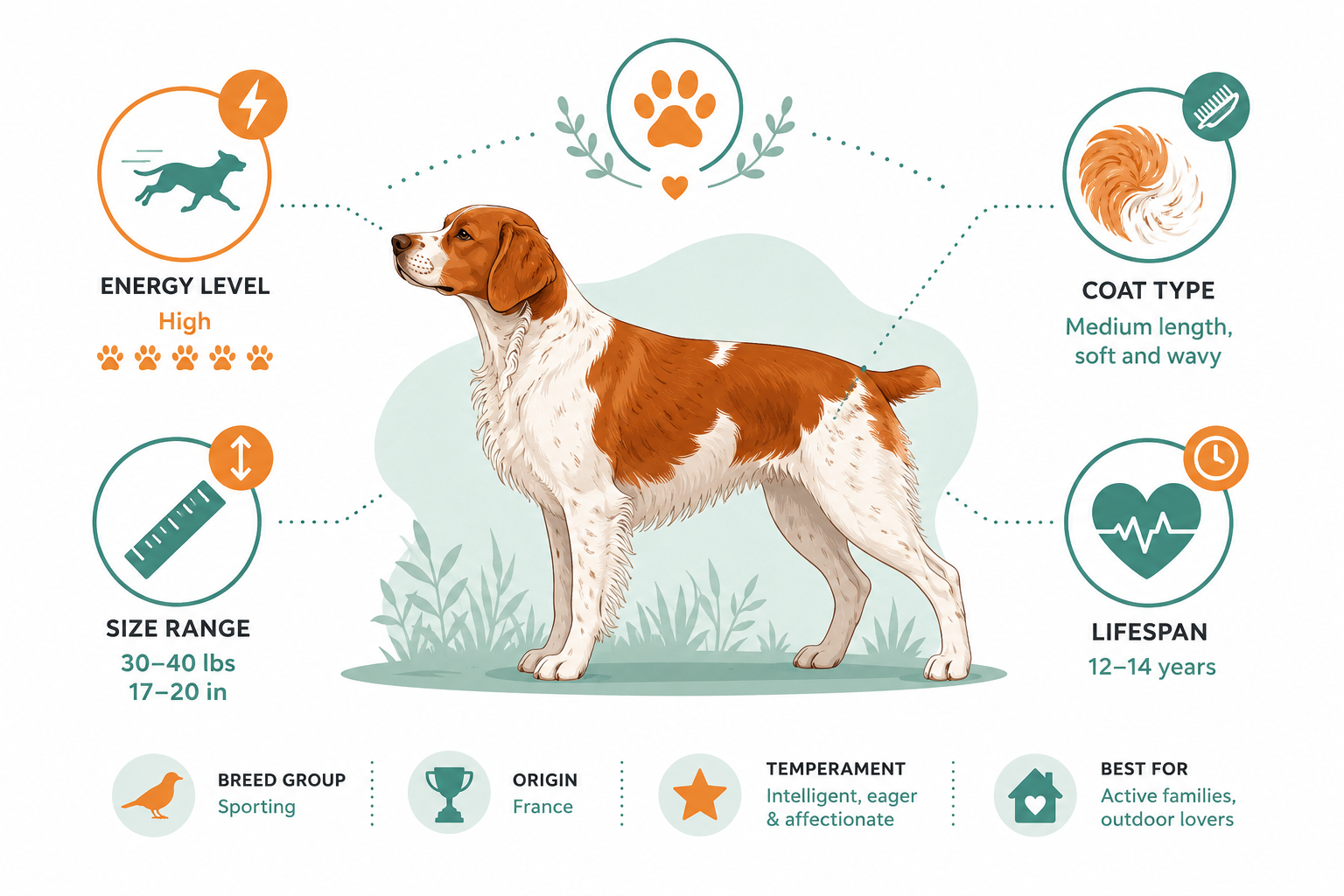
Key Takeaways
- Origin: French gun dog bred for bird hunting and pointing, recognized by the AKC and still active in field trials today [6].
- Size: Medium build, 30-40 pounds, 17.5-20.5 inches tall at the shoulder.
- Temperament: Eager, affectionate, intelligent, and sensitive, thrives on positive reinforcement and human companionship.
- Exercise needs: High, requires at least 1-2 hours of vigorous activity daily.
- Shedding: Moderate, with seasonal increases; grooming is relatively low-maintenance.
- Lifespan: Averages 11.1 years in UK data and 12.6 years in French studies [6].
- Health risks: Mildly elevated hip dysplasia and glaucoma rates compared to breed averages [6].
- Apartment suitability: Poor unless the owner can provide intense daily outdoor exercise.
- Cost: Typically $800,$2,000 from a reputable breeder.
What Is a Brittany Dog?
The Brittany dog (sometimes still called the Brittany Spaniel) is a French gun dog of spaniel type, bred primarily for bird hunting and pointing [6]. Despite the historical “spaniel” label, the breed functions as a versatile pointing dog rather than a flushing spaniel, and the American Kennel Club officially classifies it in the Sporting Group without the “spaniel” designation.
Brittanys are compact, athletic, and built for speed and endurance in the field. They typically stand 17.5-20.5 inches tall and weigh between 30 and 40 pounds, placing them squarely in the medium-size category. Their coat is dense, flat or slightly wavy, and comes in orange and white or liver and white patterns, with tri-color (orange and white with black markings) allowed but not preferred in show settings [7].
The breed originated in the Brittany region of northwest France, where it was developed as an all-around hunting companion capable of pointing, retrieving, and working in varied terrain. In 2026, the AKC also fully recognized the Basset Fauve de Bretagne, a French scent hound from the same region, which may cause some name confusion but is an entirely separate breed [1][5].
Brittany Dog Hunting Ability and History
Brittanys remain one of the most capable and popular pointing breeds for upland bird hunting. They were developed to work close to the hunter, point game birds with intensity, and retrieve on land or in water. Their compact size gives them agility in dense cover, and their natural pointing instinct typically emerges early, even in puppies.
The American Brittany Club continues to organize large national field trials and hunt tests, though participation entries have decreased through 2025, prompting discussions about event economics and AKC restructuring [7]. The breed is also featured at top-tier conformation events, including the 2026 Westminster Kennel Club Dog Show, where dedicated Brittany breed judging showcases their characteristic athletic movement [2].
Choose a Brittany if you want a versatile hunting partner that can also serve as a family companion. Skip this breed if you are looking for a dog that will be content lounging indoors after a short walk.
Brittany Spaniel Temperament and Personality
Brittanys are widely described as eager, affectionate, and highly intelligent dogs that form strong bonds with their families. They are sensitive by nature and respond best to gentle, consistent guidance rather than harsh corrections. This sensitivity makes them highly trainable but also means they can shut down if handled roughly.
As a canine companion, the Brittany thrives on being included in family activities. They are not a breed that does well left alone in a backyard for long stretches, they crave interaction and mental engagement. Most Brittanys are friendly with strangers, other dogs, and household pets when properly socialized.
Their energy and enthusiasm can sometimes translate into exuberant greetings or jumping, especially in younger dogs. Early socialization and clear boundaries help channel that energy productively.
Are Brittany Dogs Good for Families With Kids?
Yes, Brittanys generally make excellent family dogs for active households with children. Their medium size, playful nature, and affectionate disposition suit families who can match their exercise needs. However, their high energy and quick movements mean interactions with very young toddlers should always be supervised, an excited Brittany can easily knock over a small child.
For families considering this breed, it helps to think about whether your lifestyle includes regular outdoor activities. Brittanys love hiking, running, and playing fetch, making them a natural fit for families who already spend time outdoors. If you are exploring other family-friendly options, our guide to the best small dogs for kids offers additional breed comparisons.
Teaching children how to interact respectfully with your furry friend, and teaching your Brittany basic manners like “four on the floor” for greetings, sets everyone up for success.
Brittany Dog Exercise Requirements
Brittanys are a high-energy sporting breed that needs a minimum of 1-2 hours of vigorous exercise every day. This is not a breed that will be satisfied with a casual stroll around the block.
Daily exercise options include:
- Off-leash running in a safely enclosed area
- Hiking on trails with varied terrain
- Fetch and retrieve games
- Agility or obedience training sessions
- Swimming (most Brittanys enjoy water)
Without adequate physical and mental stimulation, Brittanys can develop destructive behaviors out of sheer boredom. Puzzle toys, scent work, and training games help keep their sharp minds engaged on top of physical exercise.
If your lifestyle leans more toward relaxed indoor living, you might consider exploring low-energy dog breeds instead, as a Brittany’s exercise demands are substantial and non-negotiable.
Brittany Dog Training Difficulty Level
Brittanys are intelligent and eager to learn, which makes them relatively easy to train for owners who use positive, effective dog training methods. Their desire to please, combined with their sporting heritage, means they often excel in obedience, agility, and field work.
However, their sensitivity requires a thoughtful approach. Harsh corrections or inconsistent training can cause a Brittany to become anxious or withdrawn. Breed-specific training for Brittanys should emphasize:
- Positive reinforcement: Reward-based methods work best for this soft-tempered breed.
- Short, varied sessions: Their intelligent minds benefit from variety to stay engaged.
- Early socialization: Expose puppies to different people, environments, and animals from a young age.
- Consistent boundaries: Establish rules early and maintain them consistently.
For a first-time dog owner, a Brittany can be manageable if you are committed to their exercise and training needs. A seasoned canine enthusiast will appreciate their trainability and versatility across multiple dog sports.
Brittany Dog Common Behavioral Issues
Most behavioral problems in Brittanys stem from insufficient exercise or mental stimulation. Common issues include:
- Destructive chewing or digging when bored or under-exercised
- Excessive barking if left alone for long periods
- Jumping up on people due to excitement
- Roaming or wandering if not properly contained, their hunting instinct can lead them to follow scents
These issues are largely preventable with adequate daily activity, consistent training, and proper containment. A tired Brittany is a well-behaved Brittany.
Do Brittany Dogs Shed a Lot?
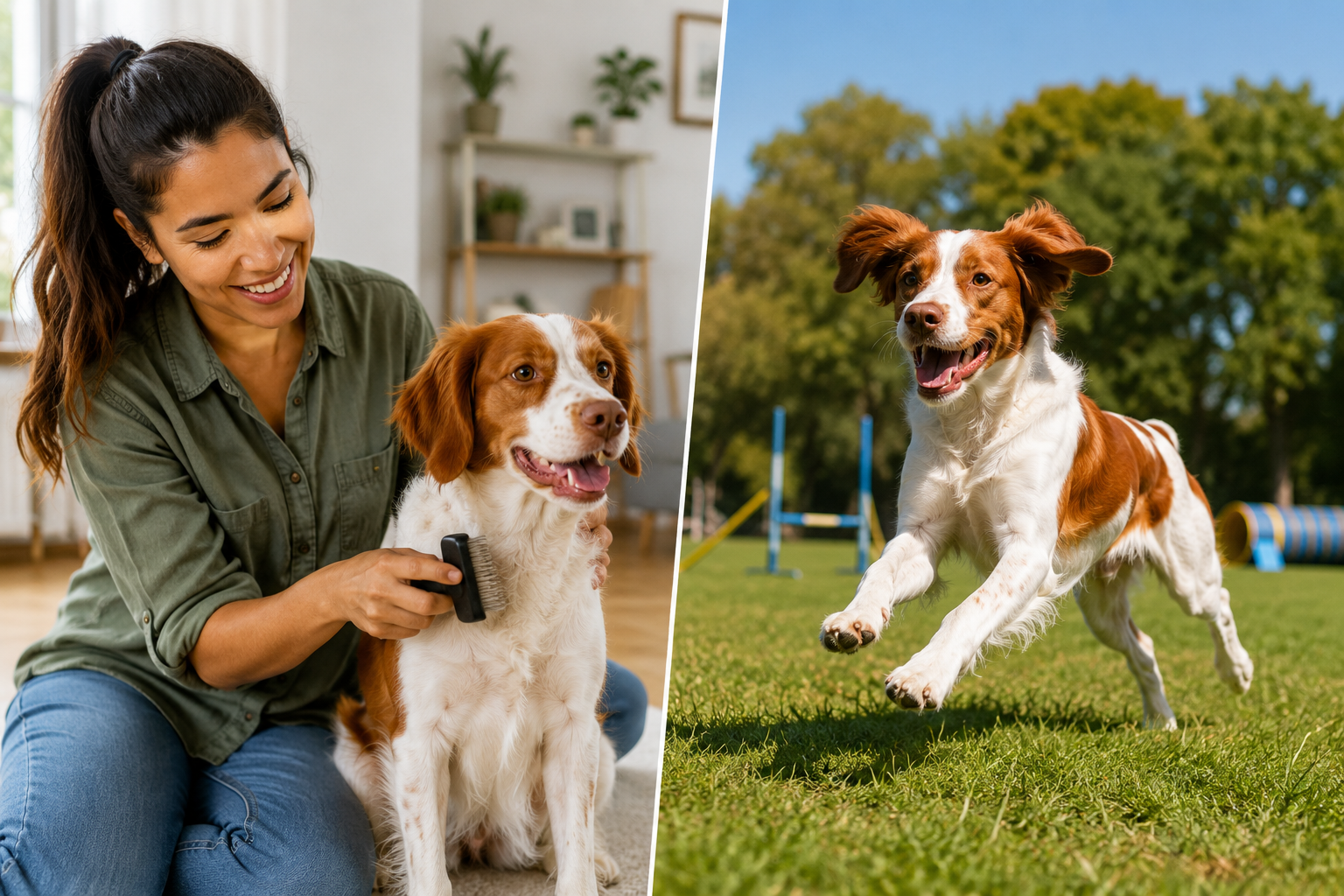
Brittanys are moderate shedders. They have a single coat (no thick undercoat), which means shedding is manageable year-round with a slight increase during seasonal changes. They are not considered heavy shedders compared to double-coated breeds.
Regular brushing, two to three times per week, is typically sufficient to keep loose hair under control and the coat healthy. During shedding seasons (spring and fall), you may want to increase brushing frequency.
Brittany Dog Grooming Needs
Grooming a Brittany is relatively straightforward compared to many sporting breeds. Their single coat does not require professional clipping or stripping.
Basic grooming routine:
- Brushing: 2-3 times per week with a medium-bristle brush or hound glove
- Bathing: Every 6-8 weeks or as needed
- Ear care: Check and clean weekly, floppy ears can trap moisture and debris
- Nail trimming: Every 3-4 weeks
- Dental care: Regular brushing or dental chews as part of preventive care
Their feathering on the legs and ears may need occasional trimming to prevent matting, especially for dogs that spend time in brushy terrain.
Brittany Dog Health Problems and Lifespan
Brittanys are generally a healthy breed with a diverse gene pool. The Brittany Club of Great Britain reports the breed “continues to be extremely healthy” with a low inbreeding coefficient of 6.1% as of March 2024 [10].
Lifespan data:
- A 2024 UK study reports an average Brittany life expectancy of 11.1 years [6]
- A 2015 French study found 12.6 years for the breed [6]
Key health considerations:
| Condition | Brittany Rate | General Dog Rate |
|---|---|---|
| Hip dysplasia | 4.22% | 3.52% |
| Elbow dysplasia | 1.7% (14th lowest of 60 breeds) | Varies |
| Glaucoma | 0.95% | 0.89% |
Data from North American orthopedic studies [6]
The breed shows mildly elevated hip dysplasia and glaucoma rates compared to overall dog averages, but elbow dysplasia is notably low. The UK Brittany Club reports only small numbers of megaoesophagus and epilepsy cases, with mandatory hip scoring for Kennel Club Assured Breeders [10].
A breed-specific veterinary study also found that Brittanys tend to have a slightly larger vertebral heart scale (VHS) than the general canine population, reinforcing the need for breed-specific interpretation of thoracic radiographs when evaluating for heart conditions like myxomatous mitral valve disease [9].
Preventive care tips:
- Choose a breeder who performs health testing on parents (OFA hip and elbow scores, eye exams)
- Maintain regular veterinary checkups
- Keep your Brittany at a healthy weight to protect joints
- Monitor for signs of eye discomfort, as glaucoma risk is slightly elevated
Are Brittany Dogs Good Apartment Dogs?
Brittanys are generally not recommended for apartment living unless the owner is deeply committed to providing intense daily outdoor exercise. Their high energy, need for off-leash running, and tendency to vocalize when bored make them better suited to homes with fenced yards.
That said, some Brittany owners in urban environments make it work by dedicating 2+ hours daily to trips to dog parks, hiking trails, or organized dog sports. If you are specifically looking for breeds better suited to apartment life, our guide to the best small dogs for apartments may be more helpful.
How Much Does a Brittany Dog Cost?
A Brittany puppy from a reputable breeder typically costs between $800 and $2,000, depending on lineage, location, and whether the parents are proven in field trials or conformation shows.
Additional first-year costs:
- Veterinary exams and vaccinations: $300,$600
- Spay/neuter: $200,$500
- Crate, bed, bowls, leash, collar: $200,$400
- Training classes: $100,$300
- Food: $400,$600 annually
Rescue organizations also occasionally have Brittanys available for adoption, typically at a lower cost of $200,$500, which usually includes spay/neuter and basic veterinary care.
Once you bring your new companion home, our Dog Name Generator can help you find the perfect name for your Brittany.
Brittany Dog vs Cocker Spaniel vs English Springer Spaniel
These three breeds are often compared because they share sporting origins, but they differ significantly in purpose, energy, and temperament.
| Trait | Brittany | Cocker Spaniel | English Springer Spaniel |
|---|---|---|---|
| Size | 30-40 lbs | 20-30 lbs | 40-50 lbs |
| Primary function | Pointing | Flushing/retrieving | Flushing/retrieving |
| Energy level | Very high | Moderate-high | High |
| Coat care | Low-moderate | High (professional grooming) | Moderate-high |
| Trainability | High | High | High |
| Best for | Active hunters, hikers | Families wanting a smaller dog | Active families, field work |
Choose a Brittany if you want a versatile pointing dog with high energy and lower grooming needs. Choose a Cocker Spaniel if you prefer a smaller, calmer companion. Choose an English Springer Spaniel if you want a flushing/retrieving breed with a slightly larger build. For more breed comparisons, explore our comprehensive profiles of European dog breeds.
FAQ
Is a Brittany a spaniel or a pointer?
The Brittany is classified as a pointing breed, despite historically being called the “Brittany Spaniel.” The AKC officially dropped “spaniel” from the name in 1982. They point game birds rather than flushing them like true spaniels [6].
How long do Brittany dogs live?
Brittanys live an average of 11-13 years. A 2024 UK study reported 11.1 years, while a 2015 French study found 12.6 years [6].
Are Brittany dogs good with cats?
With proper socialization from a young age, Brittanys can coexist with cats. However, their strong prey drive means introductions should be gradual and supervised, especially with cats they did not grow up with.
Do Brittany dogs bark a lot?
Brittanys are moderate barkers. They will alert bark to visitors or unusual sounds but are not typically excessive barkers unless bored or left alone for long periods.
Are Brittanys easy to train?
Yes, Brittanys are intelligent and eager to please, making them highly trainable with positive reinforcement methods. Their sensitivity means harsh training techniques are counterproductive.
Can Brittany dogs swim?
Most Brittanys enjoy swimming and are capable swimmers. Their webbed feet and athletic build make water work natural for them, though individual preferences vary.
What is the difference between a Brittany and a German Shorthaired Pointer?
Brittanys are smaller (30-40 lbs vs 55-70 lbs) and have a single coat compared to the GSP’s short dense coat. Both are versatile pointing breeds, but the GSP is larger and often more intense in the field. See our guide to the German Shorthaired Pointer for a detailed comparison.
Conclusion
The Brittany dog is an exceptional companion for the right owner, someone who can provide daily vigorous exercise, consistent positive training, and plenty of family interaction. This breed shines in active households that enjoy the outdoors, whether through hunting, hiking, agility, or simply long daily adventures. If your lifestyle matches their energy and you are ready for a devoted, intelligent, and athletic furry friend, the Brittany may be the perfect fit. Take the next step by connecting with a reputable breeder who performs health testing, or explore Brittany rescue organizations to find a dog in need of a loving home.
References
[1] Unleash The Hounds Terriers And Lapdogs American Kennel Club Recognizes 3 More Breeds – https://www.pbs.org/newshour/nation/unleash-the-hounds-terriers-and-lapdogs-american-kennel-club-recognizes-3-more-breeds
[2] Watch – https://www.youtube.com/watch?v=9nc9viw5Ap8
[5] New Akc Rare Dog Breeds 2026 – https://www.thepioneerwoman.com/home-lifestyle/pets/a69958147/new-akc-rare-dog-breeds-2026/
[6] Brittany Spaniel – https://en.wikipedia.org/wiki/Brittany_Spaniel
[7] Abc 2025 Agenda Book V3 – https://theamericanbrittanyclub.org/wp-content/uploads/2025/11/ABC-2025-Agenda-Book_v3.pdf
[9] Pmc8708192 – https://pmc.ncbi.nlm.nih.gov/articles/PMC8708192/
[10] Brittany Health – https://www.brittanyclub.co.uk/brittany-health/