
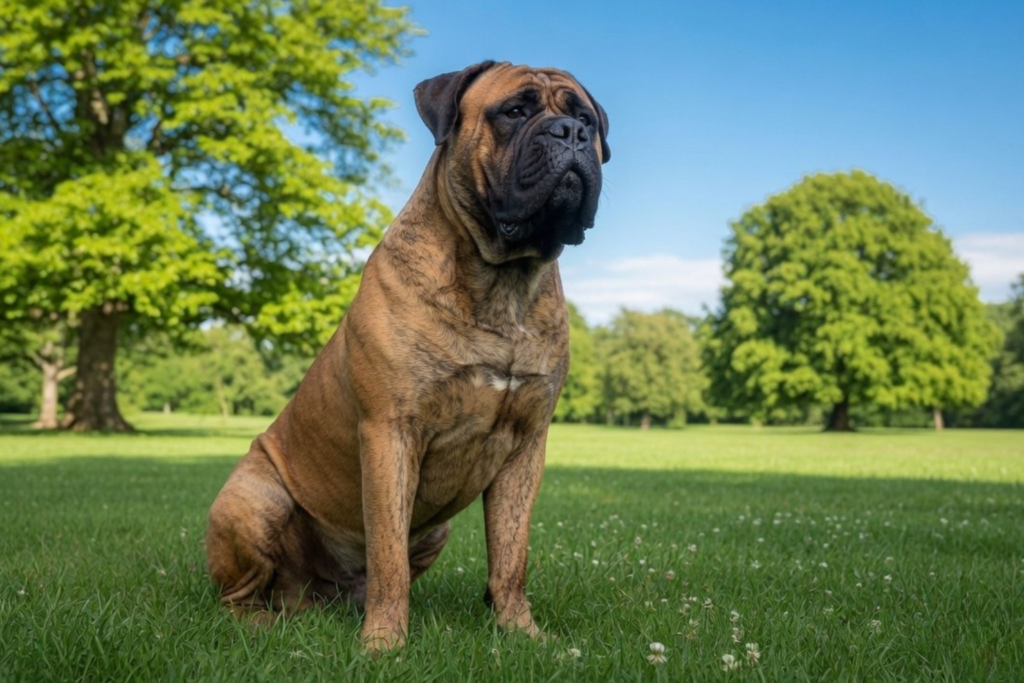
Quick Answer: The Bullmastiff is a large, powerful dog breed originally developed in England to guard estates. Bullmastiffs make excellent, fearless, and loyal family companions when properly trained and socialized. They combine physical strength with a gentle, affectionate nature toward their human pack.
Key Takeaways:
- The Bullmastiff combines reliability, intelligence, and a willingness to please their owners.
- They need moderate exercise and do best in homes with a securely fenced yard.
- Early training is crucial because they can be naturally stubborn and independent.
- Common health issues include cancer, particularly lymphoma, and hip dysplasia.
- They were historically known as the “Gamekeeper’s Night Dog” in England.
- A Bullmastiff dog requires an experienced owner who can establish clear boundaries.
What is a Bullmastiff dog breed?
The Bullmastiff is a large, muscular dog breed created by crossing the English Mastiff and the Bulldog. Originally bred in England, this dog was known as the Gamekeeper’s Night Dog to track and pin poachers without biting them.
The history Bullmastiff is rooted in the mid-19th century when gamekeepers needed a dog that could track silently and hold a human intruder. The breed is 60% Mastiff and 40% Bulldog, which gives it the size of the former and the agility of the latter.
The American Kennel Club (AKC) officially recognized the breed in 1933 3. The Fédération Cynologique Internationale (ration cynologique internationale) also recognizes the breed standard internationally 9.
Breed Standard: The bullmastiff breed standard dictates that males should stand 25 to 27 inches tall and weigh 110 to 130 pounds, while females should stand 24 to 26 inches tall and weigh 100 to 120 pounds 5.
Their coat is short and dense, coming in fawn, red, or brindle. When you read about kennel 8217 x27 8211 span class cite-bracket in historical documents, you will find that the breed was specifically designed for strength and endurance.
The American Bullmastiff Association and the american bullmastiff association both work to preserve these traits today. If you want to learn about bullmastiff origins, you will find that they are a relatively modern breed compared to other ancient mastiff types 7.
What type of owner suits a Bullmastiff dog?
A Bullmastiff dog suits an experienced, active owner who can provide firm, consistent training and has enough space for a large breed. They are not the right choice for a first-time dog owner who cannot establish clear boundaries.
The breed Bullmastiff combines reliability intelligence and reliability intelligence willingness, making them a dependable family companion. However, because of their size and protective instincts, they need an owner who understands dog psychology.
Despite their gentle nature with their family, they can be aloof with strangers. You need to be confident and calm. If you are a seasoned canine enthusiast, you will appreciate their loyalty.
Owner Requirements:
- Experience: Prior experience with large breeds is highly recommended.
- Time: They need daily interaction and cannot be left alone in the backyard.
- Leadership: You must establish yourself as the pack leader through positive reinforcement.
- Space: A large home with a yard is ideal.
While they are not overly hyper, they do need someone who is home often. Because they form strong bonds, they can suffer from separation anxiety if left alone too long 1. Don’t get a Bullmastiff if you work 12-hour shifts away from home. Get a Bullmastiff if you want a shadow that follows you from room to room 2.
How much space does a Bullmastiff need?
A Bullmastiff needs a home with a securely fenced yard to roam and stretch, though they are relatively inactive indoors. While they can adapt to larger homes, they are not suited for small apartments.
Because of their large size, a Bullmastiff needs room to move. A small apartment will feel cramped, and their tail can easily knock items off tables. They need a yard to patrol, but they are not a breed that will run laps all day. They prefer to find a comfortable spot to watch over their home.
Space Considerations:
- Yard Size: A medium to large fenced yard is best.
- Indoor Space: They need wide hallways and sturdy furniture.
- Climate: They are sensitive to heat, so they need a cool home environment in summer.
If you enjoy the outdoors, you might take your dog near your fly fishing rods and fishing rods. When you shop for gear, look for pants amp shorts, packs amp bags, and amp bags for your outdoor trips.
You can find packs amp at most outdoor retailers. If you want to explore right arrow to find the right arrow guide for arrow guide dogs, you can click the learn right arrow. Arrow right arrow right arrow right. Success success success comes from matching your lifestyle to your dog’s needs 3.
What are the most common Bullmastiff personality traits?
The most common Bullmastiff personality traits are brave, affectionate, relaxed, loyal, smart, and outgoing. The Bullmastiff temperament is defined by a protective yet gentle nature toward its family.
The Bullmastiff is a complex breed. They are fearless guardians but soft-hearted companions. Here are the six most common traits:
1. Brave
The Bullmastiff is naturally fearless. They were bred to confront armed poachers, so they do not back down from a threat. Despite this bravery, they are not aggressive without cause 5.
2. Affectionate
They are incredibly affectionate with their family. They think they are lap dogs and will try to sit on your lap. They love to lean against their owners and receive attention 7.
3. Relaxed
While they are alert when on guard, they are very relaxed indoors. They are content to sleep on the floor by your feet for hours. This makes them a calm pet for a family home 9.
4. Loyal
Loyalty is a core trait. They are devoted to their family and will protect them with their life. This loyalty means they are eager to please, which helps in training 1.
5. Smart
They are intelligent dogs. They learn commands quickly, but they can also be independent thinkers. This intelligence means they need mental stimulation to prevent boredom 2.
6. Outgoing
While they can be aloof with strangers, a well-socialized Bullmastiff is outgoing and confident. They do well in new environments if they are introduced properly 3.
Are Bullmastiffs difficult to train?
Bullmastiffs can be difficult to train because they are naturally stubborn and independent thinkers. Effective dog training requires positive reinforcement, patience, and early socialization.
Training a Bullmastiff is not for the faint of heart. They are smart, but they have a “what’s in it for me” attitude. You need to use positive reinforcement and keep training sessions short and fun. Breed-specific training is essential because of their guarding instincts 5.
Training Tips:
- Start Early: Begin training and socialization as soon as you bring your puppy home.
- Be Consistent: Use the same commands and rules every day.
- Use Positive Reinforcement: Reward good behavior with treats and praise. Never use harsh corrections.
- Socialize: Expose them to different people, dogs, and environments to prevent over-protectiveness.
If you want to learn right, you can find a right arrow guide for dog sports. Guide dogs and arrow guide dogs require extensive training, and while Bullmastiffs are not typically used as guide dogs, the same principles of patience apply 7. You can explore right arrow to find local training classes. Don’t let them get away with bad behavior just because they are cute puppies 1.
How to care for your Bullmastiff
Caring for your Bullmastiff involves regular grooming, moderate exercise, and vigilant preventive care to catch health issues early. They have short coats but do shed, and they need a balanced diet to maintain a healthy weight.
The Bullmastiff is a relatively low-maintenance dog when it comes to grooming, but they require significant attention to their health amp wellness. Their lifespan is typically 8 to 10 years 10.
Preventive Care:
- Vet Visits: Regular check-ups are crucial. They are prone to certain health issues.
- Diet: Feed a high-quality large-breed dog food to support joint health.
- Exercise: They need daily walks but should not be over-exerted, especially as puppies.
Common Health Problems:
- Cancer: Bullmastiffs have a high risk of lymphoma and other cancers. Recent genomic research is ongoing to find genetic markers 4. Lymphoma is a significant cause of mortality in the breed 6.
- Hip and Elbow Dysplasia: Common in large breeds, this affects the joints.
- Subvalvular Aortic Stenosis (SAS): A heart condition that the AKC Canine Health Foundation is researching 8.
When you shop for supplies, you need a sturdy leash, a comfortable bed, and stainless steel bowls. You can find these at your local pet shop. Because they are a large breed, their health care costs can be higher than smaller dogs. Always buy from a breeder who health tests their dogs 9.
Are Bullmastiffs destructive?

Bullmastiffs are not inherently destructive, but they can become destructive if they are bored, anxious, or lack proper exercise. Providing chew toys and mental stimulation prevents unwanted chewing.
Despite their calm demeanor, a bored Bullmastiff can destroy a couch in minutes. They have powerful jaws. If they are left alone for long periods, they may chew on furniture or dig holes in the yard.
Preventing Destructive Behavior:
- Exercise: Ensure they get a good walk every day.
- Mental Stimulation: Use puzzle toys to keep their brain engaged.
- Crate Training: A crate provides a safe space and prevents destruction when you are away.
- Companionship: They need to be around their family. Do not leave them isolated.
If your dog is destructive, it is usually a sign of an underlying need. Because they are so loyal, they can develop separation anxiety. You need to address the root cause, not just punish the behavior 2. Don’t leave them with nothing to do. Find activities they enjoy 3.
How to get a rental home with a Bullmastiff
Getting a rental with a Bullmastiff requires finding pet-friendly rentals and navigating breed and weight restrictions. You need to provide documentation of your dog’s good behavior and training.
Finding a home for a large dog can be challenging. Many landlords have weight limits or breed restrictions. However, with the right approach, you can find a place that welcomes your furry friend.
Tips for Renting with a Bullmastiff:
- Create a Pet Resume: Include their training certificates, vet records, and references from previous landlords.
- Get Canine Good Citizen Certification: This shows your dog is well-behaved.
- Offer a Pet Deposit: Be willing to pay an extra security deposit.
- Look for Private Rentals: Private landlords are often more flexible than large property management companies.
Let’s Get this Puppy Started: Finding Bullmastiff Puppies
Finding Bullmastiff puppies involves researching reputable breeders who health test their breeding stock. The Bullmastiff price can vary, so it’s important to ask about health clearances.
When you decide to get a Bullmastiff puppy, do your research. A Bullmastiff bullmastiff is a big commitment. Bullmastiff puppies are adorable, but they grow into 120-pound dogs. The breed bullmastiff requires a significant investment of time and money.
Choosing a Breeder:
- Health Testing: Ensure the breeder tests for hip dysplasia, elbow dysplasia, and heart conditions.
- Temperament: Meet the puppy’s parents to assess their temperament.
- Environment: The puppies should be raised in a clean, loving home environment.
The Bullmastiff price can range from $1,500 to $3,000 or more, depending on the breeder and lineage. Bullmastiffs make great pets, but you must be prepared for the cost of feeding and caring for a large dog.
Related Resources and Popular Resources
Explore our related resources to learn more about similar breeds, training tips, and dog care. These popular resources offer comprehensive profiles for both the first-time dog owner and seasoned canine enthusiast.
If you are interested in the Bullmastiff, you might also like other large breeds or dogs with similar temperaments. Here are some related resources to help you find the right dog for your family:
- Boykin Spaniel – A smaller, energetic hunting dog.
- Border Terrier – A tough, small terrier with a similar fearless attitude.
- Boerboel – Another large mastiff-type guard dog.
- Bloodhound – A large scent hound with a gentle nature.
- English Mastiff – The parent breed of the Bullmastiff.
- Bull Terrier – Another bulldog crossbreed.
- Dog Name Generator – Find the perfect name for your new puppy.
You can explore right arrow to learn right arrow guide for arrow guide dogs. Arrow right arrow right arrow right. Success success success comes from being informed. Whether you need to shop for food, learn about training, or find a vet, these resources can help. Don’t forget to consider senior dog care as your pet ages 10.
Frequently Asked Questions
Are Bullmastiffs aggressive?
Bullmastiffs are not naturally aggressive toward humans, but they are highly protective. They were bred to pin poachers, not bite them. However, without early socialization and training, their guarding instincts can manifest as aggression toward strangers or other dogs. They are typically gentle and affectionate with their own family.
Are Bullmastiffs a good family dog?
Yes, Bullmastiffs make excellent family dogs for the right household. They are loyal, affectionate, and patient with children. Because of their large size, they should be supervised around toddlers to prevent accidental knocking over. They thrive in a family environment where they are included in daily activities.
Why do Bullmastiffs not bark?
Bullmastiffs were bred to track poachers silently, so they are naturally quiet dogs. They do not bark unnecessarily. They will usually only bark to alert you to something unusual or if they perceive a threat. This quiet nature makes them excellent stealth guardians, but it means you must pay attention to their other body language.
Which is bigger, a Mastiff or a Bullmastiff?
The English Mastiff is significantly bigger than the Bullmastiff. English Mastiffs can weigh up to 200 pounds or more, while Bullmastiffs typically weigh between 100 and 130 pounds. The Mastiff is taller and heavier, whereas the Bullmastiff is more compact and agile due to its Bulldog ancestry.
Conclusion
The Bullmastiff is a magnificent breed that offers a unique blend of strength, loyalty, and affection. They are not the right dog for everyone, but for the experienced owner who can provide training, space, and love, they are a devoted companion. By understanding their history, temperament, and health needs, you can ensure a happy life for your furry friend. Take the time to research breeders, invest in positive training, and enjoy the unwavering loyalty of this incredible dog.
References
[1] abc7chicago – https://abc7chicago.com/archive/7967348/
[2] Watch – https://www.youtube.com/watch?v=bnm3bk6A5Io
[3] The Mastiff Breeds – https://www.akc.org/expert-advice/dog-breeds/the-mastiff-breeds/
[4] pubmed.ncbi.nlm.nih.gov – https://pubmed.ncbi.nlm.nih.gov/39682384/
[5] About The Breed – https://bullmastiff.us/about-the-breed/
[6] Pmc8379649 – https://pmc.ncbi.nlm.nih.gov/articles/PMC8379649/
[7] About The Breed – https://www.bullmastiff.us/old/about-the-breed/
[8] pubmed.ncbi.nlm.nih.gov – https://pubmed.ncbi.nlm.nih.gov/38133254/
[9] Bullmastiff – https://images.akc.org/pdf/breeds/standards/Bullmastiff.pdf
[10] Australian Bullmastiff Breed Survey Results Formatted For Print Dec 2019 – https://bullmastiffklubb.no/wp-content/uploads/2022/02/Australian-Bullmastiff-Breed-survey-results-formatted-for-print-Dec-2019.pdf