
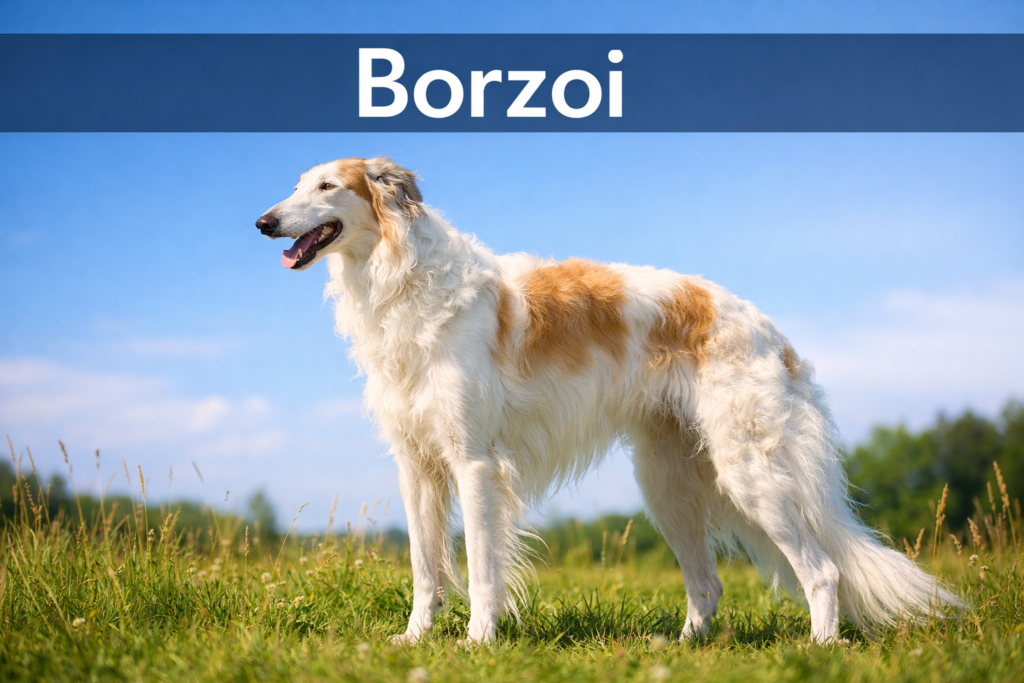
The Borzoi is a large sighthound breed from Russia, historically bred to hunt wolves, known for its towering height (26-34 inches), silky coat, and calm yet athletic temperament. Originally called the Russian Wolfhound until 1936, the Borzoi combines elegance with raw speed, reaching impressive velocities in short bursts while remaining surprisingly mellow indoors [1][7][10].
Key Takeaways
- The Borzoi originated in 16th-century Russia from crosses between Saluki-type sighthounds and thick-coated native Russian dogs [7].
- Adult Borzois stand 26-34 inches tall and weigh 60-105 pounds, with a life expectancy of 9-14 years [1][10].
- They need approximately 45 minutes of daily exercise, preferably through running or lure coursing [1].
- Borzois are calm and gentle indoors but have a strong prey drive outdoors, chasing small animals on sight [1].
- Their long, silky coat requires regular grooming and comes in colors including black and cream, brindle, and sable [10].
- The breed is biddable but easily bored in training, making consistency and variety essential [1].
- Borzois can coexist with indoor cats if raised together, but outdoor small animals may trigger chasing instincts [1].
What Is a Borzoi Dog?
The Borzoi is a large sighthound developed in Russia for hunting wolves and other game, characterized by its tall, slender frame, long silky coat, and quiet dignity. The breed was created in the 16th century by crossing Saluki and other European sighthounds with thick-coated native Russian dogs, producing a cold-tolerant hunter capable of remarkable speed [7]. The word “borzoi” itself is linked to the concept of “fast,” reflecting the breed’s defining trait [7][11]. In contemporary Russian, the official breed name is russkaya psovaya borzaya [7].
The breed was known as the Russian Wolfhound in English-speaking countries until 1936, when the name was officially changed to Borzoi [7]. Today, the Borzoi is recognized by major kennel clubs worldwide and participates in lure coursing, conformation shows, and companion dog activities.
Borzoi Temperament and Personality
Borzois are calm, gentle, and elegant dogs that behave like quiet couch companions indoors but transform into explosive athletes when given space to run. They are often described as cat-like in their independence and dignity, preferring to observe before acting [1][10].
Key personality traits include:
- Affectionate but reserved: Borzois bond deeply with their families but may be aloof with strangers.
- Sensitive: Harsh corrections shut them down quickly; positive reinforcement works best.
- Quiet: They rarely bark, making them surprisingly unobtrusive neighbors.
- Good with other dogs: They generally coexist peacefully with canine companions [1].
Borzois are better suited to older individuals and households without chaotic activity. They do not tolerate rough handling from young children well, preferring a calm, predictable environment [1].
Borzoi vs Greyhound Differences
Borzois and Greyhounds are both sighthounds built for speed, but the Borzoi is taller, heavier, and coated in long silky fur, while the Greyhound is smaller, sleeker, and short-haired. The Borzoi stands 26-34 inches tall and weighs 60-105 pounds, compared to the Greyhound’s typical 27-30 inches and 60-70 pounds [1][10].
| Trait | Borzoi | Greyhound |
|---|---|---|
| Origin | Russia | United Kingdom |
| Coat | Long, silky, feathered | Short, smooth |
| Height | 26-34 inches | 27-30 inches |
| Weight | 60-105 pounds | 60-70 pounds |
| Temperament | Calm, cat-like, reserved | Gentle, social, outgoing |
| Grooming | High maintenance | Low maintenance |
| Cold tolerance | High | Low |
Choose a Borzoi if you want a taller, cold-tolerant companion with a luxurious coat and don’t mind the grooming. Choose a Greyhound if you prefer a lower-maintenance, more social dog that adapts easily to new people.

Why Are Borzois So Tall and Skinny?
Borzois are tall and skinny because they were selectively bred for speed and agility in open Russian landscapes, where a lean frame and long legs allowed them to chase and hold wolves. Their deep chests provide massive lung capacity for sprinting, while their narrow bodies reduce wind resistance [7][10].
This build is shared across sighthound breeds and is functional rather than a sign of being underweight. A healthy Borzoi will have visible ribs when viewed from the side, which is normal for the breed. Overfeeding a Borzoi to “fill out” its frame can cause joint stress and reduce lifespan.
How Much Does a Borzoi Cost?
A Borzoi puppy from a reputable breeder typically costs between $1,500 and $3,000, depending on pedigree, location, and breeder reputation. Show-quality puppies with champion bloodlines can exceed $3,500.
Additional first-year costs include:
- Veterinary exams and vaccinations: $400,$700
- Spay/neuter surgery: $300,$600
- Crate, bed, and supplies: $300,$500
- High-quality food: $500,$800 annually
- Grooming supplies or professional grooming: $400,$800 annually
Borzois are not among the most affordable dog breeds to own due to their size, grooming needs, and specialized care requirements.
Borzoi Health Problems and Lifespan
The Borzoi has an average lifespan of 9-14 years, with some individuals living longer with proper care [1][10]. The breed is generally healthy but is prone to several conditions that prospective owners should monitor.
Common health concerns include:
- Gastric dilatation-volvulus (bloat): Deep-chested breeds like the Borzoi are at elevated risk. Feeding smaller meals and avoiding exercise after eating can help reduce risk.
- Cardiomyopathy: Heart conditions can affect the breed; regular cardiac screenings are recommended.
- Hip and elbow dysplasia: Though less common than in heavier breeds, joint issues can occur.
- Progressive retinal atrophy (PRA): An inherited eye condition that can lead to blindness; reputable breeders test breeding stock.
- Anesthesia sensitivity: Sighthounds metabolize certain drugs differently, requiring veterinarians experienced with the breed.
Working with a breeder who performs health testing on parent dogs is the single most effective way to reduce the risk of inherited conditions.
Are Borzois Good for Apartments?
Borzois can live in apartments if they receive adequate daily exercise, but they are not an ideal apartment breed due to their large size and need for running space. Their quiet, low-barking nature is a point in their favor, and they are generally calm indoors [1]. However, a Borzoi cooped up without sufficient physical activity can become anxious and destructive.
If apartment living is unavoidable, the owner must commit to daily off-leash running in a safely enclosed area. Simply walking a Borzoi on a leash will not meet its exercise needs. For those seeking breeds specifically suited to apartment life, exploring the best small dogs for apartments may be more practical.
Borzoi Exercise Needs Per Day
A Borzoi needs approximately 45 minutes of daily exercise, with a strong preference for running rather than walking [1]. This breed is built for sprinting, not endurance, so short bursts of high-speed running in a safely fenced area are more valuable than long, slow walks.
Ideal exercise activities include:
- Lure coursing: Simulates the chase instinct in a controlled environment.
- Free running in a fenced field: Must be at least 6 feet tall, as Borzois can jump.
- Daily walks: 20-30 minutes on leash for mental stimulation and elimination.
- Play with other large dogs: Satisfies social and physical needs simultaneously.
Never exercise a Borzoi off-leash in an unfenced area. Their prey drive overrides recall training when they spot movement.
Borzoi Grooming and Care Requirements
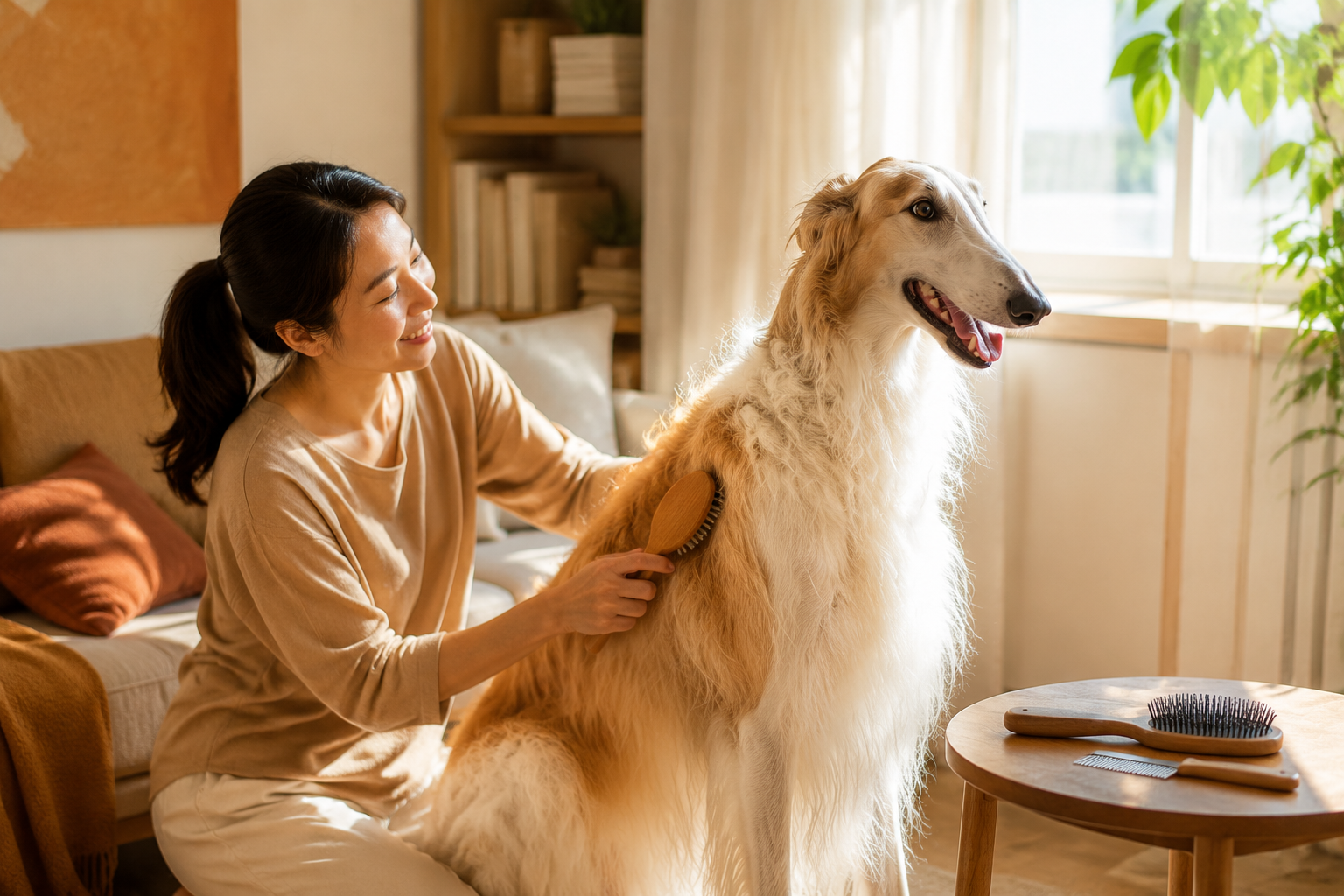
The Borzoi’s long, silky coat may be flat, wavy, or curly, with pronounced feathering on the neck, back, and tail [10]. This coat requires regular maintenance to prevent matting and keep the dog comfortable.
Grooming essentials:
- Brushing: 2-3 times per week with a pin brush and metal comb to prevent tangles in the feathering.
- Bathing: Every 6-8 weeks, or as needed, using a mild dog shampoo.
- Nail trimming: Every 2-3 weeks to prevent overgrowth and splitting.
- Ear cleaning: Weekly checks for wax buildup or infection.
- Dental care: Daily brushing or dental chews to prevent periodontal disease.
The Borzoi sheds moderately year-round, with heavier shedding periods seasonally. They are not hypoallergenic, so those with allergies should explore hypoallergenic dog options instead.
Borzoi Training Difficulty and Tips
Borzois are intelligent and biddable but easily bored, making training a challenge that requires patience, variety, and positive reinforcement [1]. They are not the type of dog that repeats a command 50 times for practice; they lose interest quickly and may simply walk away.
Effective training strategies:
- Keep sessions short (5-10 minutes maximum).
- Use high-value rewards like fresh meat or cheese.
- Vary the location and sequence of commands to prevent boredom.
- Never use harsh corrections; Borzois shut down under pressure.
- Focus on recall training early, but accept that prey drive may override recall outdoors.
For owners interested in breeds known for trainability, the Border Collie is a strong alternative. However, for those committed to the Borzoi, consistency and gentleness yield the best results.
Do Borzois Get Along With Cats?
Borzois can coexist peacefully with indoor cats if they are raised together from puppyhood, but they will likely chase unfamiliar outdoor cats and small animals on sight [1]. This dual behavior stems from their sighthound instinct: they chase movement outdoors but can distinguish between “family” and “prey” indoors.
To successfully integrate a Borzoi with cats:
- Introduce them gradually in a controlled indoor environment.
- Never leave them unsupervised until trust is firmly established.
- Provide cats with escape routes and high perches.
- Avoid introducing adult Borzois to small pets they have never encountered.
For households with small pets, reviewing dog breeds known to chase rabbits can help assess compatibility.
Common Borzoi Behavior Issues
The most common Borzoi behavior issues stem from their prey drive, sensitivity, and independent nature rather than aggression. Understanding these traits helps owners manage expectations.
- Chasing small animals: This is instinctive and cannot be fully trained out. Management through fencing and leash use is essential.
- Separation anxiety: Borzois bond closely and may become distressed when left alone for long periods.
- Reluctance to walk on certain surfaces: Some Borzois refuse to walk on slippery floors or grates due to their long legs and poor traction.
- Counter-surfing: Their height makes kitchen counters easily accessible.
- Leash pulling: Despite their calm demeanor, Borzois can pull hard when they spot prey.
Best Borzoi Breeders Near Me
Finding a reputable Borzoi breeder requires research, patience, and a willingness to ask direct questions about health testing and breeding practices. The breed is relatively rare, so waiting lists of 6-12 months are common.
What to look for in a breeder:
- Health testing of parent dogs for cardiac conditions, hip dysplasia, and eye disorders.
- Willingness to provide references from previous puppy buyers.
- Transparency about the breed’s challenges, including prey drive and grooming needs.
- Membership in recognized breed clubs, such as those affiliated with the Borzoi Club or regional organizations like the Midwest Borzoi Club.
- A clean, safe environment where dogs are raised as part of the family.
Avoid breeders who cannot provide health clearances, have multiple litters available simultaneously, or pressure buyers into quick decisions.
Is a Borzoi Right for Me?
A Borzoi is right for you if you have a safely fenced yard, value a quiet and gentle companion, and can commit to regular grooming and daily running exercise. This breed thrives in calm households with owners who appreciate its independent, dignified nature [1][10].
Choose a Borzoi if:
- You have a securely fenced area of at least 6 feet in height.
- You want a quiet, low-barking dog.
- You enjoy grooming and maintaining a long coat.
- Your household is calm, with older children or no children.
- You can provide daily opportunities for sprinting exercise.
Reconsider a Borzoi if:
- You have very young children who may handle the dog roughly.
- You live in an apartment without access to a fenced running area.
- You have small outdoor pets like rabbits or free-roaming cats.
- You want a highly obedient, off-leash companion.
- You prefer a low-grooming breed.
For those seeking a lower-energy companion, breeds suited for seniors and retirees may be a better match. The Borzoi’s Russian heritage also connects it to other Russian dog breeds worth exploring.
Conclusion
The Borzoi is a unique blend of elegance, speed, and quiet companionship. Bred for centuries to hunt wolves across the Russian countryside, this sighthound brings a calm dignity to the home while requiring dedicated exercise, grooming, and management of its prey drive. Prospective owners should carefully evaluate their living situation, activity level, and willingness to work with the breed’s sensitive, independent nature before committing. For those who can meet its needs, the Borzoi offers a loyal, graceful, and deeply rewarding partnership. Connect with a reputable breeder, visit breed club events, and spend time with adult Borzois before making your decision.
FAQ
What is the average lifespan of a Borzoi?
The average lifespan of a Borzoi is 9-14 years, depending on genetics, diet, and overall health management [1][10].
How tall do Borzois get?
Adult Borzois stand 26-34 inches at the withers, with males typically taller than females [1][10].
Are Borzois aggressive?
No. Borzois are calm, gentle, and non-aggressive by nature. They may be aloof with strangers but are rarely aggressive toward people [1].
Do Borzois shed a lot?
Borzois shed moderately year-round with heavier seasonal shedding. Their long coat requires brushing 2-3 times per week [10].
Can Borzois live with cats?
Yes, if raised together from puppyhood. However, they will likely chase unfamiliar cats and small animals outdoors due to their sighthound prey drive [1].
How fast can a Borzoi run?
Borzois can reach speeds of approximately 35-40 miles per hour in short sprints, making them one of the faster dog breeds.
Are Borzois easy to train?
Borzois are intelligent but easily bored. Training requires short sessions, positive reinforcement, and patience. They are not suited to repetitive drill-based methods [1].
How much exercise does a Borzoi need daily?
A Borzoi needs about 45 minutes of daily exercise, with a strong preference for running in a safely fenced area rather than walking [1].
References
[1] Borzoi – https://www.britannica.com/animal/Borzoi
[2] Index – https://borzoi.breedarchive.com/home/index
[3] Let Me Do It For You – https://memepedia.ru/let-me-do-it-for-you/
[4] Mbc Bulletin June – https://www.midwestborzoiclub.net/uploads/2/5/1/7/25171847/mbc-bulletin-june.pdf
[5] theborzoiclub.org.uk – https://www.theborzoiclub.org.uk/
[6] Canadian Kennel Club Recognizes Two New Dog Breeds – https://www.ckc.ca/en/News/2025/July/Canadian-Kennel-Club-Recognizes-Two-New-Dog-Breeds
[7] Borzoi – https://en.wikipedia.org/wiki/Borzoi
[8] More 60 Breed Clubs Have Their Specialty Shows Connection World Dog Show 2025 – https://www.kennelliitto.fi/en/about-us/news/more-60-breed-clubs-have-their-specialty-shows-connection-world-dog-show-2025
[9] Tiktok Users Loving Borzois Dog 214253356 – https://www.yahoo.com/news/tiktok-users-loving-borzois-dog-214253356.html
[10] Borzoi – https://www.chewy.com/education/dog-breeds/borzoi